
Test planning best practices: how TestRail simplifies test plans, milestones, and coverage
HS
In agile teams, it’s common for traditional test plans to be thought of as outdated formalities. However, even in the rapid pace of agile environments, maintaining a simplified test plan proves invaluable. It provides a structured framework to guide testing efforts across a project’s lifecycle without slowing teams down with unnecessary documentation.
Test planning defines the scope, approach, resources, schedule, and success criteria for a testing effort, providing the foundation every downstream testing activity depends on. TestRail simplifies test planning with structured test suites and sections for organizing test cases, milestone-based planning for tracking progress against release targets, coverage visibility that helps teams see which requirements have test coverage and which do not, and reusable templates that reduce setup work for every new release cycle.
Integrated with tools like Jira, Azure DevOps, automation frameworks, and CI/CD workflows, TestRail connects test plans directly to the requirements, stories, defects, and releases they validate. Instead of maintaining test plans in static spreadsheets or disconnected documents, QA teams can use TestRail to create a structured, trackable planning workflow that evolves with the project.
TestRail turns an Agile test plan from a static document into a living workspace—milestones, test runs, and coverage update in real time as the sprint moves. Teams author plans faster with AI-powered test case generation from Sembi IQ and keep them in two-way sync with Jira.
Here are practical strategies to simplify test planning within agile environments:
- Capture the most essential information
- Use structured, reusable test plan templates
- Prioritize high-impact tests
- Use visual aids
- Adopt lightweight documentation practices
- Connect planning to execution, coverage, and reporting in TestRail
TL;DR
Agile test planning should be lightweight, flexible, and connected to real testing work. TestRail helps QA teams simplify test planning by organizing test cases into structured suites and sections, linking plans to milestones, tracking coverage, supporting reusable templates, connecting tests to Jira and development workflows, and giving stakeholders visibility into planning progress. Instead of managing plans in spreadsheets, teams can use TestRail to keep planning, execution, traceability, and reporting in one platform.
Agile test planning fundamentals
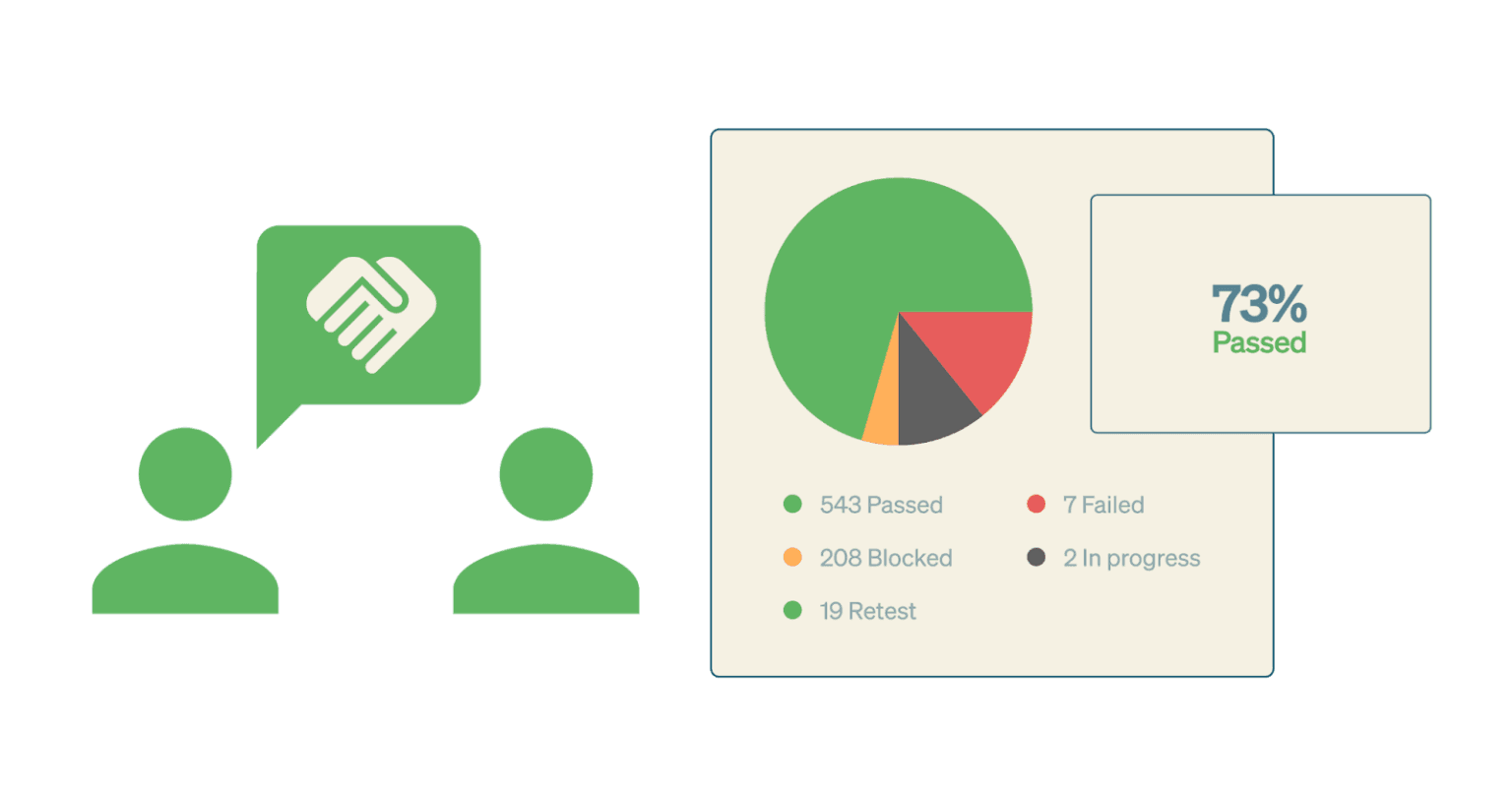
Agile test planning is about flexibility and adaptability. Unlike more rigid traditional methods like waterfall, it is not just about preparation. It is also about being able to respond quickly to change.
In an agile environment, test planning operates on the core principles of iteration, collaboration, and continuous improvement:
- Iteration: Agile development breaks down projects into more manageable sprints. Similarly, test planning occurs throughout the development lifecycle. This iterative testing approach allows for earlier feedback, faster issue identification, and better adaptation to changing requirements.
- Collaboration: Unlike traditional methods, where planning often occurs in isolated teams, agile test planning depends on collaboration. It brings together development teams, testing teams, product owners, and other stakeholders to ensure alignment with project goals.
- Continuous improvement: Agile methodologies prioritize continuous improvement, and agile test planning should do the same. Teams regularly reflect on their processes, identify areas for improvement, and make adjustments to improve quality and efficiency.
TestRail supports these fundamentals by giving teams a centralized place to create, organize, execute, and refine test plans over time. QA teams can plan iteratively, collaborate across roles, and use real test data to improve future planning cycles.
What is test planning and how does TestRail support it?

Test planning is the process of defining what needs to be tested, how it will be tested, who will test it, when testing will happen, what resources are required, and what criteria will determine whether testing is complete.
A test plan typically includes:
- Testing objectives
- Scope of testing
- In-scope and out-of-scope items
- Test approach
- Test environments
- Testing schedule
- Assigned resources
- Risks and dependencies
- Entry and exit criteria
- Reporting expectations
In agile environments, the test plan should not be a static document that gets written once and ignored. It should be a living plan that evolves as priorities, requirements, risks, and timelines change.
TestRail supports test planning by connecting test cases, suites, runs, milestones, assignments, results, defects, and reports in one platform. This means QA teams can move from static planning documents to active test plans that are connected to execution and reporting from day one.
How TestRail simplifies test planning

TestRail replaces spreadsheet-based test planning with a structured, trackable workflow that gives QA teams visibility into planning progress, test coverage, assignments, and execution readiness from a single platform.
| Test planning activity | How TestRail supports it | |
| Define test scope | Hierarchical test suites and sections help organize test cases by feature, module, workflow, or risk level | |
| Create and organize test cases | A centralized test case library helps teams create, reuse, and maintain test cases across projects and releases | |
| Set milestones and schedules | Milestones connect test planning to release dates, sprint cycles, and delivery targets | |
| Assign resources | Per-test and per-run assignments help QA managers distribute work and identify ownership | |
| Track coverage | Traceability and coverage reporting help teams understand which requirements, stories, or features are covered by tests | |
| Manage configurations | Configuration options help teams plan testing across browsers, devices, operating systems, environments, or other variables | |
| Reuse planning structures | Templates and reusable test assets reduce repeated setup work for recurring release cycles | |
| Monitor progress | Dashboards and reports help teams track planning, execution, defects, and milestone readiness |
How TestRail connects test planning to the rest of QA
A TestRail test plan is not an isolated document. It connects planning to the rest of the QA workflow:
- Test cases can be linked to requirements, stories, or references
- Milestones tie planning to sprint cycles and release targets
- Test runs connect the plan to actual execution
- Assignments clarify ownership and workload
- Defects connect failed tests to issue tracking workflows
- Reports show stakeholders progress, coverage, quality risks, and release readiness
This connected workflow is what makes TestRail useful for agile teams. Instead of maintaining separate planning documents, spreadsheets, and status reports, QA teams can plan, execute, track, and report from one shared test management platform.
Strategies to simplify test plans for agile teams
In agile software development, teams need test plans that are lightweight enough to maintain but structured enough to guide testing. Agile teams focus on quickly delivering value to customers, often by streamlining processes and minimizing documentation.
The goal is not to eliminate test planning. The goal is to simplify it so the plan supports the team’s work instead of becoming overhead.
1. Focus on the essential information
Shift your focus from creating extensive documentation to delivering value through effective testing. Identify the essential information necessary to guide testing efforts and prioritize documenting those aspects.
Define testing objectives
When creating test plans, start by clearly defining the objectives of your testing effort, such as checking functionality, performance, usability, accessibility, or security. Identify the test objectives, testing tasks, such as unit testing, integration testing, and user acceptance testing, and key milestones without adding unnecessary detail.
TestRail’s milestone feature helps teams connect test objectives to release targets and sprint cycles, making the objective trackable from the moment the plan is created.
Specify the scope of testing
It’s important to clearly define the scope of testing, including supported environments, OS versions, in-scope work, and out-of-scope work. Specify testing needs like functional testing, regression testing, and performance tests, and define what is expected from third-party teams or other internal groups.
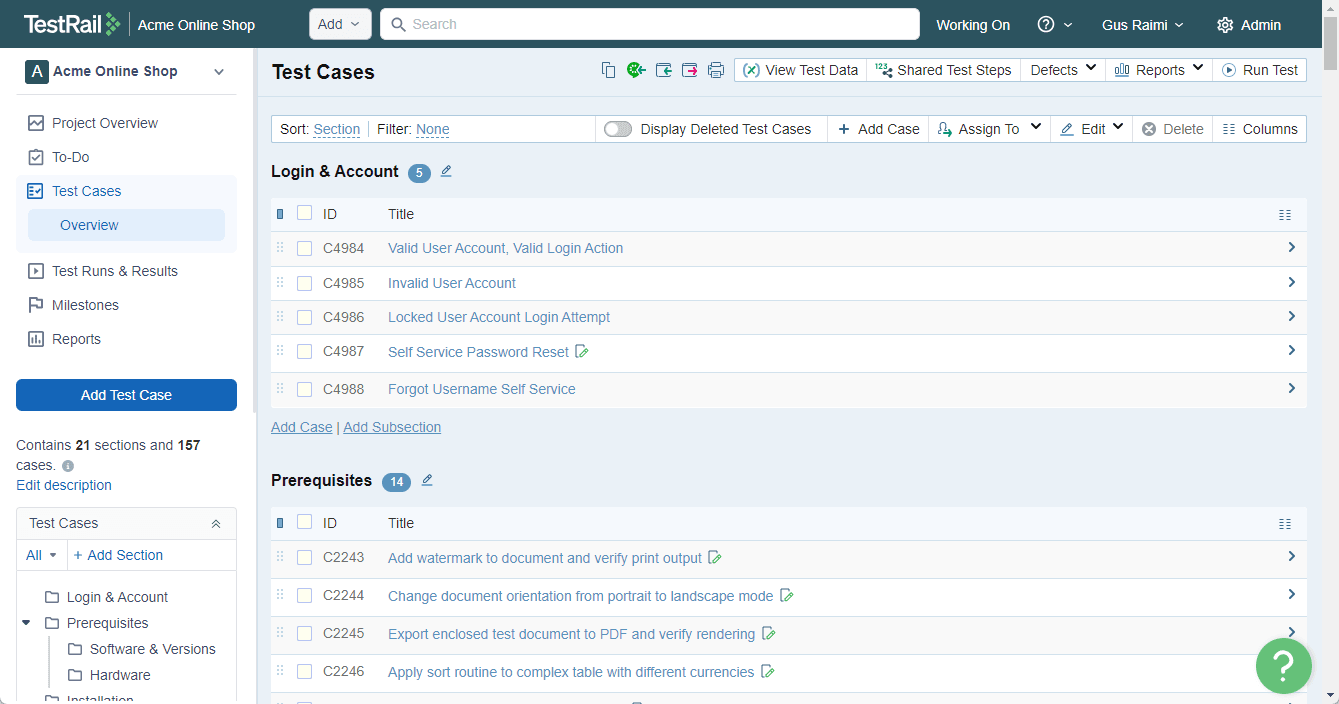
TestRail helps structure test scope through test suites and sections, making scope easier to navigate than a long planning document. QA managers can see which features, modules, or workflows are covered and where gaps remain.
Example: mobile application project
Consider a mobile application project targeting both Android and iOS platforms. Listing supported environments and OS versions in the test plan ensures early setup of test environments and proper allocation of testing tasks. This approach prevents redundant testing across multiple environments during release.
Any aspects not defined in the initial test plan can be automatically considered out of scope. To that point, it’s essential to distinctly define in-scope and out-of-scope categories within the test plan.
In-scope items may include:
- Functional testing on all user stories
- Regression tests
- Sanity tests
- Final user acceptance tests
- Specific performance and load tests
- Test case reviews
Out-of-scope items may include:
- Testing outsourced to a third party
- Security testing handled by another team
- Testing on OS versions older than the minimum supported version
- Features deferred to a later release
Clearly defining scope reduces duplicate work, improves resource planning, and gives stakeholders a shared understanding of what the current testing effort will and will not cover.
2. Stay flexible
Recognize that project requirements and priorities may change over time. Keep your test plans flexible and adaptable, allowing them to evolve alongside the project. Regularly review and update the documentation to reflect any changes or updates.
In static documents, this often creates version control problems. Multiple copies of the plan may circulate through email or chat, making it unclear which plan is current.
TestRail helps teams maintain a living test plan. As test cases are added, assignments change, priorities shift, and coverage requirements evolve, the plan can be updated in the same platform where execution and reporting happen.
3. Use agile test planning tools: why QA teams use TestRail
Leverage agile tools and technologies to streamline your documentation process. Explore options such as test management platforms, version control, or agile project management tools to simplify documentation and enhance collaboration within your team.
Centralize your testing activities to make it easier to access and manage test assets, reduce duplication, and ensure consistency and collaboration across the testing process.
TestRail is the test management layer that helps QA teams connect agile planning to execution. Teams can use it to:
- Organize test cases into reusable suites and sections
- Connect test cases to requirements, references, and stories
- Assign tests to team members
- Track test runs and milestones
- Prioritize high-risk cases
- Connect defects to failed tests
- Report on test coverage, execution status, and release readiness
For agile teams, this means the test plan becomes part of the workflow rather than a document that sits outside the testing process.
4. Use agile test plan templates
Leverage agile test plan templates or frameworks to streamline the planning process:
- Find or create an agile test plan template that suits your project’s needs. Look for templates that include sections for key testing activities, milestones, and objectives.
- Customize the template to align with your project’s specific requirements. Add or remove sections as needed to ensure relevance.
- Fill in the template with essential details like testing tasks, timelines, and team responsibilities.
- Keep the template up to date as your project evolves, making sure it accurately reflects any changes in testing priorities or requirements.
TestRail supports reusable planning by helping teams standardize test case templates, organize test suites, and maintain reusable test assets across releases. This reduces blank page planning and helps teams build on proven structures from previous projects.
The Test Case (Text) template, one of the customizable test case templates in TestRail, allows users to describe the steps testers should take to test a given case more fluidly.
Test plan templates: how TestRail eliminates blank page planning
Templates are one of the easiest ways to simplify test planning. Without them, every release cycle starts with the same questions: What should the plan include? Which sections do we need? Which environments matter? Who owns what? What was included last time?
TestRail helps teams reduce repeated setup work by making test structures reusable across projects and releases.
A reusable TestRail planning structure may include:
- Suite and section structure: Organize test cases by feature, module, workflow, product area, or risk level.
- Test case templates: Standardize how testers document steps, expected results, preconditions, and supporting details.
- Configuration groups: Define browser, device, OS, environment, or data combinations without duplicating test cases unnecessarily.
- Milestones: Map planning and execution to sprint cycles, release targets, or major delivery checkpoints.
- Assignments: Clarify ownership for test case creation, review, execution, and follow-up.
- Coverage targets: Define what must be covered before the team considers testing complete.
TestRail templates vs. spreadsheet templates
Spreadsheet templates can help teams standardize documentation, but they still require manual updates to case lists, assignees, dates, configurations, and coverage calculations for every new release cycle.
TestRail gives teams a more operational planning structure. Test cases, runs, milestones, assignments, and reports are connected, so the plan can move directly into execution without recreating the same tracking layers in a spreadsheet.
5. Prioritize tests
In agile projects, time and resources are limited, so it’s essential to prioritize testing activities based on their potential impact on the product.
Identify critical functionality
Start by identifying the most critical features and functionalities of your software. These are the aspects that are essential for the product to function correctly and meet user needs.
Assess user workflows
Understand the key user workflows within your application. Determine which workflows are most commonly used or have the greatest impact on the user experience.
Assess risk
Evaluating potential risks and their level of impact is crucial in test case prioritization. In the context of test case prioritization, risk refers to the probability of a bug occurring and the potential impact if that bug reaches users.
Assessing risk usually involves analyzing the likelihood of an identified risk occurring and the implications the risk could have if it occurs.
TestRail helps teams organize a test case repository based on priority so QA managers can structure execution around risk rather than running tests in an arbitrary order. High-risk cases can be prioritized early in the cycle, which is especially useful when timelines are tight.
6. Use visual aids
Visual aids such as diagrams, flowcharts, or mind maps can help simplify complex test plans and make them more accessible to stakeholders. Use visual representations to illustrate test processes, dependencies, and relationships between different testing activities.
Visual aids can enhance understanding and communication, making it easier to convey the software testing strategy to team members and stakeholders.
TestRail complements visual planning by giving teams the structured test assets behind those visuals. Diagrams can explain the workflow, while TestRail keeps the actual test cases, assignments, results, defects, and reporting connected.
Test plan components and how TestRail structures each one
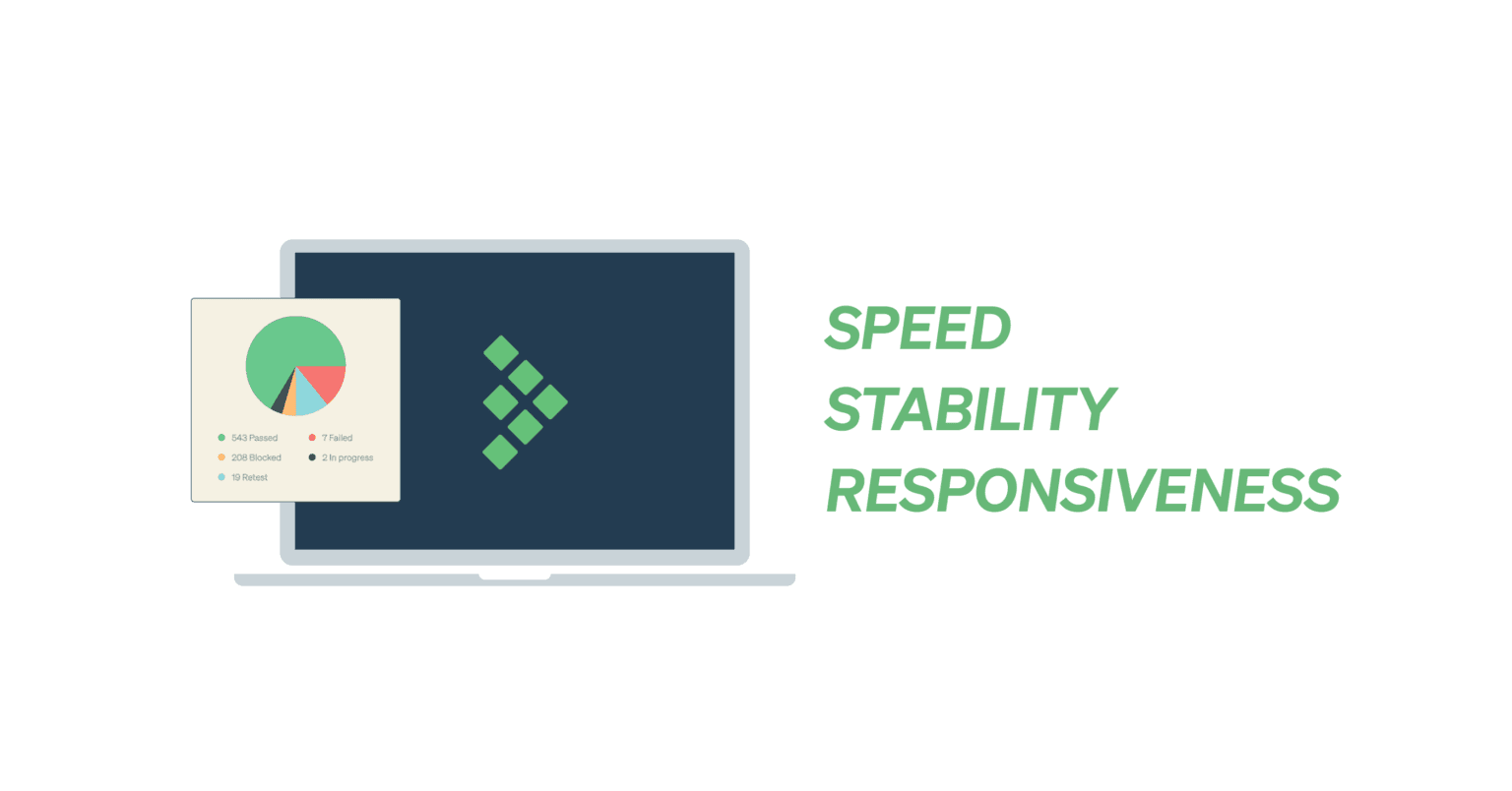
A simplified test plan should still include the information teams need to test effectively. The difference is that agile teams should keep these components practical, trackable, and easy to update.
| Test plan component | Why it matters | How TestRail supports it |
| Test scope | Defines what will and will not be tested | Test suites and sections help organize scope by feature, module, workflow, or risk area |
| Test objectives | Clarifies what the team is trying to validate | Milestones and test runs connect objectives to sprint or release targets |
| Test approach | Explains the types of testing the team will perform | Manual, exploratory, automated, regression, and risk-based testing can be tracked in one platform |
| Resource plan | Defines who owns test creation, review, execution, and reporting | Assignee tracking helps clarify ownership and workload |
| Test schedule | Identifies when planning, execution, review, and sign-off should happen | Milestones help teams track progress against release or sprint timelines |
| Risk assessment | Prioritizes high-risk areas for earlier testing | Priority fields help teams focus on the most critical cases first |
| Entry and exit criteria | Defines when testing can begin and when it is complete | Reports and milestone progress help teams evaluate readiness with current data |
| Reporting plan | Defines how results will be shared | TestRail dashboards and reports give stakeholders visibility into progress and quality |
Using a test management platform like TestRail helps keep these components active and trackable. Instead of describing the test plan in a document and then managing the real work elsewhere, QA teams can connect the plan directly to test execution, coverage, and reporting.
Test planning best practices with TestRail

Crafting a streamlined and effective test plan requires thoughtful attention to ensure thorough coverage and successful results. Here are some best practices for agile test planning.
Start planning early
Test planning should start during sprint planning or requirements review, not after development is complete. Early planning helps QA teams identify risks, clarify acceptance criteria, and prepare test coverage before work reaches the testing queue.
TestRail’s test case library allows QA engineers to begin creating and organizing test cases from user stories during sprint planning, making early test planning a natural part of the sprint workflow.
Define coverage explicitly
Coverage should not be assumed. Define which requirements, features, workflows, environments, and user roles need to be tested.
TestRail helps teams connect test cases to requirements and references, making it easier to see where coverage exists and where gaps remain.
Use risk-based prioritization
Not every test has the same business impact. Prioritize tests based on risk, customer impact, revenue impact, compliance exposure, and likelihood of failure.
TestRail’s priority fields help QA managers mark high-risk cases for earlier execution, ensuring the most critical functionality is validated first in time-constrained release cycles.
Plan for reuse
Do not recreate the same test cases or plans from scratch every cycle. Reuse proven test assets wherever possible and update them as the product evolves.
TestRail’s shared test case library helps QA teams reuse existing cases across multiple plans and releases, building test coverage incrementally rather than starting over each time.
Integrate planning with development
Test planning should connect to the development backlog, requirements, and release schedule. If test planning happens separately from development work, coverage gaps and communication issues become more likely.
TestRail integrates with development and issue-tracking workflows so teams can link test cases to requirements, stories, references, and defects.
Track planning progress explicitly
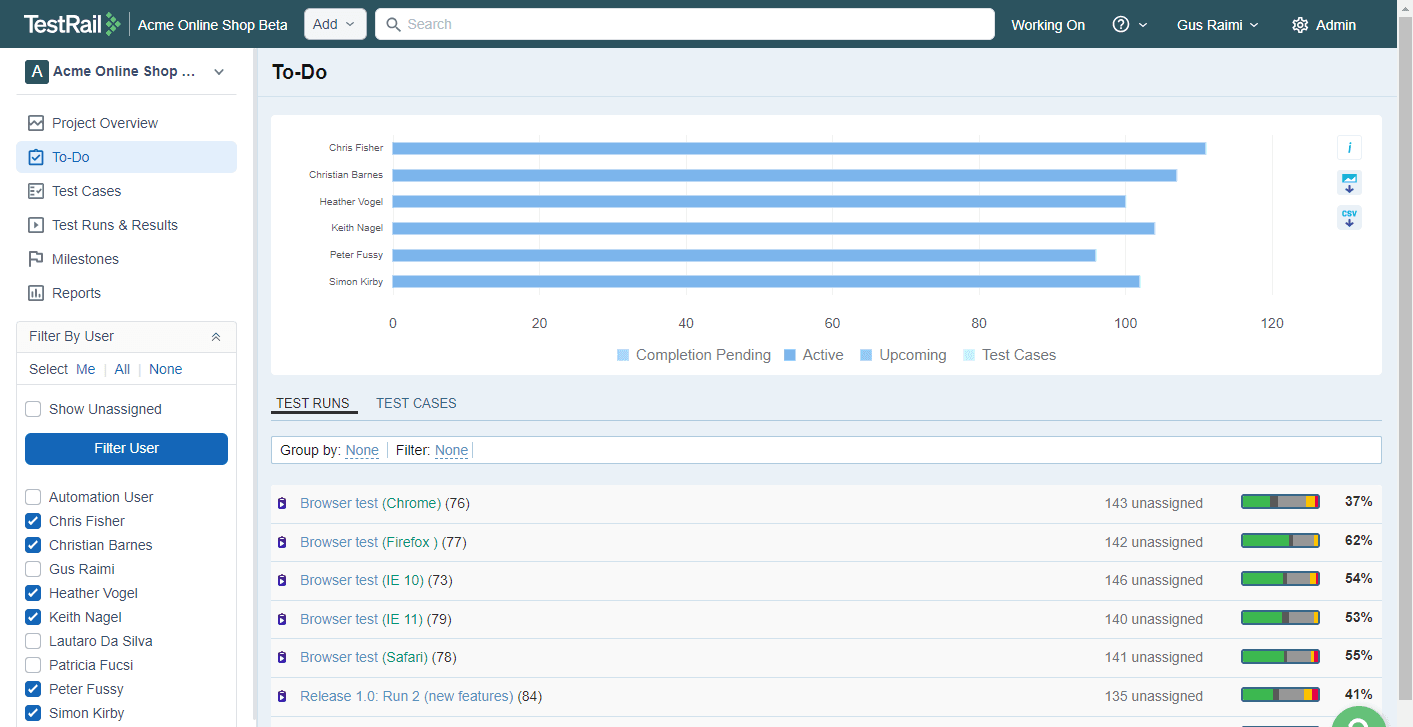
Planning progress should be visible to the team. QA managers need to know whether test cases are created, reviewed, assigned, prioritized, and ready for execution before the testing window begins.
TestRail reports and dashboards help teams track coverage, assignments, test runs, and milestone progress so planning status is easier to communicate.
Maintain a living test plan
Treat your test plan as something that evolves over time. Regularly review, update, and refine the test plan based on feedback, lessons learned, and changing project requirements.
A living test plan is especially important in agile environments, where changes are expected. TestRail helps teams maintain test plans that can evolve with the project while keeping planning, execution, and reporting connected.
Promote collaboration
Foster collaboration among team members by encouraging open communication, sharing knowledge, and facilitating cross-functional interactions. Collaboration enhances the quality of the test plan and promotes collective ownership of testing goals.
It’s important to collaborate with stakeholders from different domains to gather insights, requirements, and expectations. Engaging stakeholders early in the process helps ensure alignment and enhances the relevance of your test plan.
TestRail supports collaboration by centralizing test assets, execution status, assignments, and reports so QA, development, product, and stakeholder teams can work from the same source of truth.
Use automation wisely
Leverage automation testing tools and frameworks to streamline repetitive tasks, accelerate testing cycles, and improve efficiency. However, ensure that test automation efforts align with project objectives and provide meaningful value.
TestRail can be integrated with almost any platform or framework, making it easier to integrate automated tests and submit test results with TestRail’s flexible API and CLI tools.
Establish metrics
Define relevant metrics and key performance indicators to assess the effectiveness of your testing efforts. Monitor progress, track outcomes, and use data-driven insights to continuously refine your test plan.
| Metric | Formula | What it measures | Example |
| Defect density | Defect count / size of release | Measures the number of defects per unit of software size | If software has 30 defects and 5,000 lines of code, its defect density is 0.006 defects per line of code |
| Test coverage | Total number of requirements mapped to test cases / total number of requirements × 100 | Indicates the percentage of requirements covered by test cases | If 80 requirements are mapped to test cases out of 100 total requirements, test coverage is 80% |
| Defect detection efficiency | Percentage of defects detected during a phase / total number of defects | Measures the effectiveness of defect detection during a specific phase | If 50 defects are detected during testing out of 80 total defects, DDE is 62.5% |
| Time to market | Time taken from idea to product launch | Measures the duration from concept to release | If it takes 10 months from idea to launch, the TTM is 10 months |
TestRail helps teams track planning and execution metrics by connecting test cases, requirements, results, defects, milestones, and reports in one platform.
TestRail vs. spreadsheet-based test planning

Most QA teams start with spreadsheet or document-based test plans. As release cycles accelerate and test libraries grow, manual test planning creates compounding problems that a purpose-built test management platform can reduce.
| Problem | Spreadsheet test planning | TestRail |
| Coverage visibility | Manual calculation of covered vs. uncovered requirements | Coverage and traceability reporting helps teams see planned and tested coverage |
| Resource tracking | Assignee lists maintained manually with limited workload visibility | Assignment tracking clarifies who owns each test or test run |
| Plan reuse | Copy and update a previous spreadsheet for each release | Reusable test assets and templates reduce repeated setup work |
| Milestone tracking | Dates tracked manually with limited progress visibility | Milestones connect test planning to sprint and release timelines |
| Traceability | Manual linking of test cases to requirements in separate documents | Test cases can be linked to requirements, references, defects, and results |
| Stakeholder visibility | Reports prepared and distributed manually after each cycle | Dashboards and reports help stakeholders see current testing progress |
| Version control | Multiple versions of the same plan may circulate through email or chat | A single shared platform helps teams work from the same current information |
| Planning to execution | Planned and executed tests are often tracked separately | Test plans connect directly to test runs, results, and reports |
For QA teams managing multiple releases, distributed teams, or hundreds of test cases per cycle, the overhead of spreadsheet test planning can quickly become difficult to sustain. TestRail helps reduce that overhead by keeping planning, execution, traceability, and reporting connected.
TestRail test planning for compliance and regulated industries
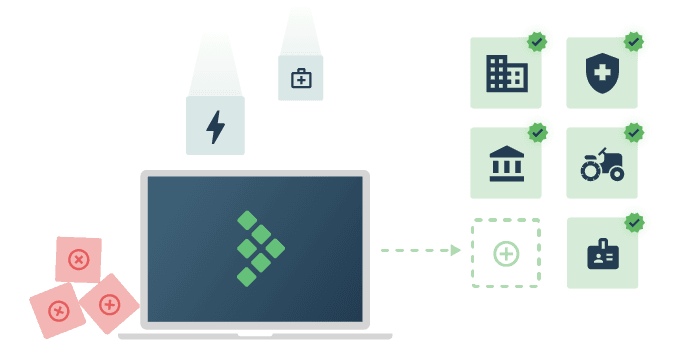
For QA teams in regulated industries, test planning is not just a workflow efficiency question. It can also support audit evidence, traceability, and release documentation.
TestRail can help compliance-conscious teams support test planning requirements through:
- Requirements traceability from planning: Test cases can be linked to requirements and references during the planning phase, not only after execution.
- Coverage planning evidence: Coverage and traceability reports can show which requirements have planned or executed test coverage.
- Resource and schedule documentation: Milestones, test runs, and assignees help document planned testing work and ownership.
- Change visibility: Test case history, audit logs, and administrative controls can help teams maintain a clearer record of testing activity.
- Centralized evidence: Test cases, results, defects, reports, and supporting attachments can live in one platform instead of scattered documents.
Organizations in medical device, aerospace, financial services, government, and other regulated sectors often need planning documentation that supports quality and compliance workflows. TestRail helps teams maintain this evidence as part of normal QA work rather than as a separate documentation process.
Compliance needs vary by organization and industry, so teams should validate specific regulatory requirements with their internal quality, compliance, security, and legal stakeholders.
Bottom line
Agile test planning does not need to be heavy, rigid, or document-driven. The most effective test plans are lightweight enough to maintain, structured enough to guide testing, and connected enough to support execution, reporting, and stakeholder decisions.
TestRail simplifies test planning with structured test suites, reusable test assets, milestone-based planning, coverage visibility, assignments, reporting, and integrations with the tools your team already uses. It helps QA teams replace spreadsheet-based planning with a structured, trackable workflow that gives stakeholders visibility into planning progress, test coverage, and release readiness.
Ready to simplify test planning and give your team clearer visibility from planning through execution? With TestRail, QA teams can create structured test plans, organize reusable test cases, track milestones, monitor coverage, and connect planning directly to test execution and reporting. Start your free trial today to see how TestRail helps agile teams manage test planning with more clarity and less manual effort.
Frequently asked questions about agile test planning
What tool do you use to build an agile test plan?
TestRail helps teams build and manage agile test plans as living milestones and test runs that update as the sprint progresses. QA teams can use TestRail to organize test cases, assign ownership, track coverage, connect defects, and report on release readiness from one platform.
With AI-assisted authoring from Sembi IQ and two-way Jira sync, TestRail helps the plan evolve with the sprint instead of becoming a static document that falls out of date.
What should be included in an agile test plan?
An agile test plan should include the testing objectives, scope, in-scope and out-of-scope items, test approach, environments, schedule, owners, risks, dependencies, entry criteria, exit criteria, and reporting expectations.
The plan should be lightweight enough to maintain during a sprint but structured enough to guide real testing work. In TestRail, teams can connect these planning details to test cases, milestones, assignments, coverage, defects, and reports.
Do agile teams still need test plans?
Yes. Agile teams still need test plans, but they do not need long, static documents that slow down delivery. A useful agile test plan gives the team a shared understanding of what needs to be tested, who owns the work, which risks matter most, and how testing progress will be tracked.
TestRail helps agile teams keep test planning practical by connecting planning directly to execution, coverage, reporting, and release readiness.
How is an agile test plan different from a traditional test plan?
A traditional test plan is often created upfront as a detailed document. An agile test plan is lighter, more flexible, and updated throughout the sprint or release cycle.
Instead of treating the plan as a one-time deliverable, agile teams use it as a working guide that changes as priorities, requirements, and risks change. TestRail supports this approach with milestones, test runs, reusable test cases, assignments, and real-time reporting.
How does TestRail help with agile test planning?
TestRail helps QA teams organize test cases into reusable suites and sections, connect plans to milestones, assign testing work, track coverage, manage test runs, link defects, and report on progress from one platform.
This gives agile teams a clearer way to manage planning without relying on spreadsheets, disconnected documents, or manual status updates.
Can TestRail connect agile test plans to Jira?
Yes. TestRail integrates with Jira so QA and development teams can connect test cases, defects, requirements, stories, and testing progress. This helps teams keep test planning aligned with sprint work and gives stakeholders better visibility into quality status as work moves forward.
How can AI help with agile test planning?
AI can help agile teams speed up test planning by drafting test cases from requirements, user stories, or acceptance criteria. In TestRail, Sembi IQ supports AI-assisted test case generation so QA teams can create a stronger starting point faster.
Teams should still review, refine, and approve AI-generated test cases before execution. The goal is not to replace QA judgment, but to reduce manual setup work and help teams move from planning to testing faster.