
AI vs Traditional Test Design: Comparing QA Approaches
CF
Quality assurance teams are under more pressure to design effective tests faster, especially as release cycles accelerate and applications become more complex. Traditional test design still plays an essential role, but fully manual test case creation can struggle to keep pace with frequent product changes, growing test suites, and increasing coverage demands.
AI-assisted test design offers a way to scale parts of that work. AI tools can help generate draft test cases, identify coverage gaps, flag redundancy, and suggest edge cases based on available requirements, existing tests, defect history, or other inputs. But AI is not a complete solution. It still needs human review, product context, and QA judgment to produce reliable results.
This article compares AI vs. traditional test design, explains where each approach performs best, and makes the case for a hybrid model that combines AI-generated speed with human expertise.
What is traditional test design?
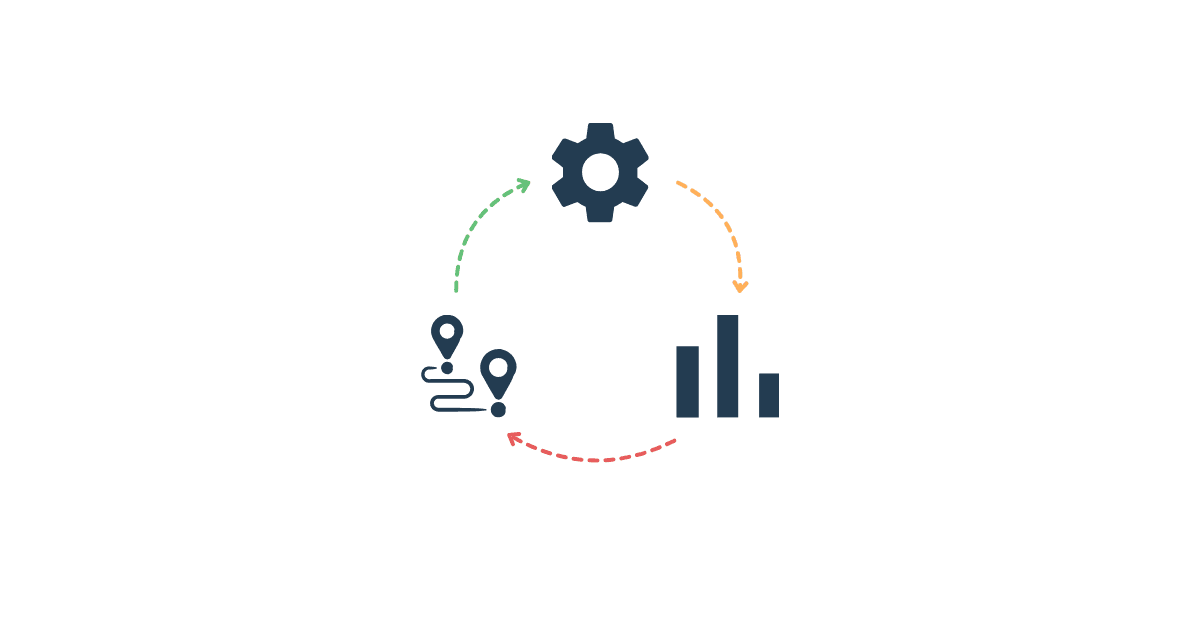
Traditional test design is the process QA engineers use to plan what needs to be tested before execution begins. It usually starts with a close review of product requirements, user stories, acceptance criteria, risks, and known product behavior.
From there, QA teams define the scenarios, test conditions, expected outcomes, and data needed to validate the software. Those tests may later be executed manually, automatically, or both.
Test design often includes common user paths, negative tests, boundary cases, equivalence classes, decision tables, and risk-based scenarios. For example, a QA engineer might design tests for the “happy path,” where a user completes a workflow correctly, as well as “unhappy paths,” where users enter invalid data, abandon a form, go backward in a flow, or interact with the product in unexpected ways.
An effective QA team does not try to test every possible scenario. Instead, it identifies the highest-risk, highest-value scenarios to test, including common workflows, edge cases, failure conditions, and areas where defects would have the biggest customer or business impact.
The benefits of traditional test design
When it’s done well, traditional test design is a rigorous and highly effective discipline. Experienced testers bring deep product knowledge to the process, along with a strong understanding of how software works in real-world conditions.
A senior QA engineer who has worked on a product for years will often spot the edge case that a requirements document never mentioned. They may know which workflows users misunderstand, which parts of the application have historically been fragile, and which defects would create the greatest risk for customers or the business.
That context matters. Strong test design depends on more than reading requirements. It requires judgment, curiosity, risk awareness, and an understanding of how users actually interact with the product. These strengths are difficult for AI to replicate because they depend on product context, customer knowledge, and experience built over time.
At the same time, traditional test design has limitations, especially when teams are working with large applications, fast release cycles, and constantly changing requirements.
The limitations of traditional test design
Manual test case creation takes time. As software becomes more complex and updates become more frequent, QA teams may struggle to keep test suites current using traditional methods alone.
Designing a strong test case means reviewing requirements, identifying risks, defining test data, documenting steps, clarifying expected outcomes, and mapping the case back to the right feature or requirement. For a large application with hundreds of features, that work can quickly become difficult to scale.
Automation helps teams execute tests faster, but automation does not eliminate the need for thoughtful test design. Automated tests still need to be planned, written, reviewed, maintained, and updated as the product changes. Brittle automated tests can also create maintenance overhead, especially when workflows, UI elements, or requirements change frequently.
This is one reason QA teams are beginning to explore AI-assisted test design. The goal is not to remove human judgment from the process. It is to reduce repetitive drafting work, improve coverage analysis, and help teams focus more time on review, prioritization, and higher-value testing activities.
What is AI-driven test design?
AI-assisted test design uses AI technologies, including large language models and machine learning, to help QA teams create, analyze, and refine test cases.
These tools can support different parts of the test design process. For example, they may help generate draft test cases from requirements, suggest edge cases, identify duplicate or overlapping tests, recommend updates when requirements change, or analyze existing coverage for gaps.
AI can help teams generate tests at a greater scale than purely manual drafting. It can also help standardize test case structure, improve consistency, and make large test suites easier to review.
It’s important to stress that AI does not replace the need for experienced QA engineers. AI-generated test cases should be treated as drafts. QA teams still need to review them for accuracy, relevance, priority, and alignment with real user behavior.
How AI analyzes requirements and test suites
AI-assisted test design often starts with natural language inputs, such as user stories, acceptance criteria, product requirements, or release notes. Using natural language processing, AI tools can analyze those inputs and suggest test cases based on the expected behavior described.
Depending on the tool and how it is configured, AI may also analyze existing test cases, defect history, usage patterns, API documentation, or other available context. That analysis can help identify coverage gaps, redundant tests, missing edge cases, or areas where the test suite no longer reflects the current product.
With that information, AI can generate an initial set of test cases that QA engineers can review, revise, and approve. Some tools can also suggest test steps, expected results, test data, or priority levels.
AI can be especially useful for creating a first draft quickly. But the quality of that draft depends heavily on the quality of the inputs, the specificity of the prompt or workflow, and the review process that follows.
How do AI and traditional test design compare?
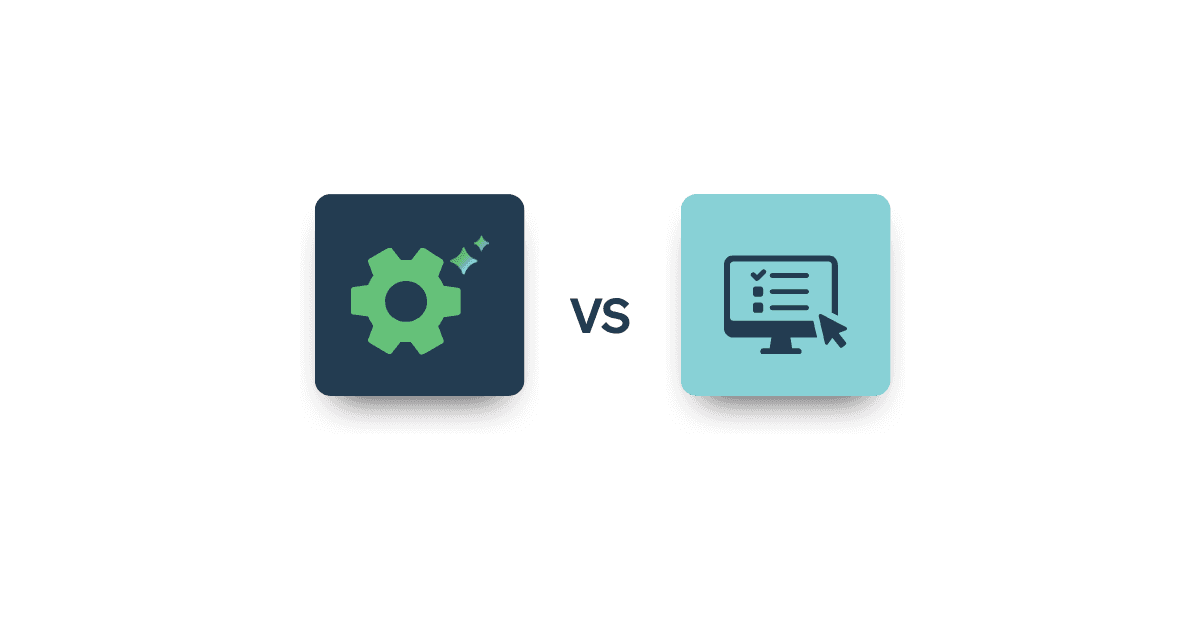
AI-assisted and traditional test design are not opposing approaches. They solve different problems and work best when used together.
The key differences show up in four areas: speed, edge case coverage, consistency, and contextual judgment.
Speed of test case generation
This is where the contrast between AI and traditional test design is sharpest.
Traditional test design takes time because it depends on careful analysis, documentation, and review. A QA engineer needs to understand the requirement, identify the relevant scenarios, define expected outcomes, and decide which cases are worth testing.
AI-assisted test design can speed up the first-draft process. AI tools can review available inputs and generate a set of draft test cases in minutes. For high-volume work, such as form validation, API endpoint coverage, or standard CRUD workflows, this can save teams a significant amount of time.
However, AI-generated test cases are not usually ready to use without review. QA engineers still need to check whether the cases are accurate, relevant, complete, and aligned with the product. Even with that review step, AI can reduce the time it takes to move from requirements to a usable set of test cases.
Edge case coverage
Traditional test design catches edge cases through experience, intuition, and product knowledge. A skilled tester may think of obscure inputs, unusual user behavior, workflow interruptions, or combinations of actions that are not obvious from the requirements alone.
AI approaches edge cases differently. Depending on the information available to it, AI can analyze patterns across requirements, existing test cases, defect history, or usage data to suggest scenarios a tester might not naturally consider.
AI will not necessarily outperform an experienced tester in this area. But it can provide broad, systematic coverage and help surface possibilities that deserve review.
The strongest approach is to combine both: use AI to expand the initial list of scenarios, then use human expertise to decide which edge cases are realistic, valuable, and worth including.
Consistency and standardization
Consistency becomes more important as test suites grow. Without clear structure, test libraries can become difficult to search, maintain, and analyze.
Traditional test design can vary from tester to tester. Different team members may use different naming conventions, levels of detail, formats, or assumptions. Over time, a test library can become harder to maintain, especially when team members leave or when new testers need to understand past decisions.
AI can help improve consistency by generating test cases in a standardized format. When test cases follow the same structure and terminology, teams can more easily review coverage, compare cases, identify duplicates, and onboard new team members.
That said, standardization should not mean accepting every AI-generated test as-is. Teams still need clear templates, review criteria, and governance around how AI-generated cases are edited and approved.
Contextual judgment
This is where test design remains essential.
Experienced QA engineers understand the product, the users, the business goals, and the risks behind a release. They know which workflows matter most, which areas are historically fragile, and which defects would have the greatest impact.
AI is more limited in this area. AI tools are good at processing inputs and identifying patterns, but they do not naturally understand product strategy, customer expectations, design intent, or business risk unless that context is clearly provided.
Without the right context, AI may generate cases that are technically valid but not very useful. It may test low-risk scenarios too heavily, miss a high-priority workflow, or misunderstand ambiguous requirements.
That is why human review is essential. QA experts should evaluate AI-generated test cases before they are added to the test suite, especially when testing complex workflows, critical user paths, or high-risk releases.
Where does AI improve test design most?

AI-assisted test design is most useful when teams need speed, scale, and repeatability. It can help reduce the time spent on repetitive drafting tasks and give QA engineers a stronger starting point for review.
Scaling test design for large applications
Large products can include hundreds of features, each with many possible workflows, inputs, and failure conditions. Designing test cases manually for every change can be difficult, especially for lean QA teams.
AI can help by generating draft test cases across a broad set of features quickly. This can be especially useful when teams are working from well-defined requirements, structured user stories, or consistent acceptance criteria.
The value is not that AI replaces tester judgment. The value is that AI gives testers a faster starting point, so they can spend more time evaluating risk, refining coverage, and improving test quality.
Keeping test cases current in fast-release cycles
When requirements change or new features are released, test suites need to be updated. In fast-moving development cycles, keeping tests current can become a constant challenge.
AI can help teams identify what changed and suggest new or updated test cases based on the latest requirements. This can make it easier to keep coverage aligned with the current product.
However, AI-generated updates should still be reviewed by QA engineers. A changed requirement may affect user behavior, business logic, integrations, or downstream workflows in ways that AI may not fully understand.
Reducing redundancy in large test suites
Redundant tests tend to build up over time. Different QA engineers may create overlapping cases, old tests may remain in the suite after features change, and similar scenarios may be documented in multiple places.
AI can help analyze large test repositories and flag duplicates, near-duplicates, outdated cases, or tests that no longer map clearly to current requirements.
This can make test maintenance more manageable. It can also help teams reduce noise, improve coverage visibility, and focus execution on the tests that matter most.
Where traditional test design still matters
AI can speed up test design workflows, expand drafting capacity, and help maintain large test suites. But there are still areas where human expertise is essential.
Exploratory testing and creative problem-solving
Exploratory testing is an open-ended approach where testers investigate the software, follow their curiosity, and look for unexpected problems. It depends on observation, intuition, product knowledge, and creative thinking.
This kind of testing is difficult to reduce to a pattern. A tester may notice that a workflow feels confusing, that a user might misinterpret a label, or that an unexpected sequence of actions creates a defect. These discoveries often come from human curiosity and experience.
AI can support exploratory testing by suggesting areas to investigate, but it cannot fully replace the tester’s ability to observe, adapt, and follow unexpected clues in real time.
Deep product knowledge and realistic user behavior
Experienced testers understand how real users interact with a product. They know which workflows are common, which mistakes users frequently make, and which paths matter most to the business.
That understanding helps them prioritize tests. A minor issue in a rarely used settings page may matter less than a defect in checkout, onboarding, reporting, or another business-critical workflow.
AI tools operate based on the context they are given. If they do not have access to product knowledge, usage data, or business priorities, they may not know which tests deserve the most attention.
Human expertise helps ensure the test suite reflects real user behavior and real business risk..
Interpreting ambiguous requirements
Requirements are not always complete or perfectly clear. They may contain gaps, assumptions, or language that can be interpreted in more than one way.
Experienced QA engineers know when a requirement needs clarification. They can ask product managers, designers, developers, or business stakeholders the right questions before turning that requirement into a test case.
AI tools may not reliably recognize when a requirement needs clarification, especially if the workflow treats AI output as final. That creates risk. An AI-generated case may look complete while still testing the wrong behavior or missing the real intent of the feature.
Human review helps catch those issues before they enter the test suite.
The hybrid approach: how modern QA teams combine both
The strongest test design strategy is not AI vs. traditional test design. It is a hybrid model that uses AI for speed and scale while keeping human judgment at the center.
A typical AI-assisted test design workflow might look like this:
- A new feature requirement comes in.
The QA team uses an AI tool to generate an initial set of draft test cases. - QA engineers review the draft for accuracy, relevance, and completeness.
- The team adds missing scenarios, removes irrelevant cases, and adjusts priorities.
- Test cases are organized, approved, and tracked in the team’s test management system.
- Results from manual and automated execution are reviewed over time to improve the suite.
In this model, AI handles part of the mechanical drafting work. QA engineers focus on review, refinement, prioritization, and risk analysis.
That creates a faster test design process without removing the quality and insight that experienced testers bring.
Managing AI-generated test cases with TestRail

TestRail helps teams manage one of the most persistent challenges in AI-assisted testing: keeping large volumes of generated test cases organized, reviewable, and connected to the rest of the QA process.
AI can create a high volume of draft test cases quickly. Without a structured system for managing those cases, teams can end up with overlapping tests, inconsistent naming, unclear ownership, and a test library that becomes harder to maintain over time.
TestRail gives teams a central place to manage both AI-assisted and manually created test cases. Teams can organize cases into suites, connect tests to requirements, track execution results, and monitor progress across releases.
TestRail also helps teams maintain visibility across manual and automated testing workflows. Automated results can be connected back to TestRail through integrations and the TestRail CLI, giving teams a clearer view of test coverage, execution history, and release readiness.
With the right structure in place, AI-generated tests can become part of a governed QA workflow instead of adding noise to an already crowded test library.
Best practices for adopting AI-assisted test design

Every team is different, but a few best practices can help QA teams adopt AI-assisted test design in a thoughtful, controlled way.
High volume, repetitive tasks
AI tends to deliver the most immediate value when the work is structured and repeatable. Good starting points include form validation, API endpoint coverage, standard user flows, and requirements with clear acceptance criteria.
Starting with well-defined scenarios gives teams a chance to evaluate AI output, refine prompts or templates, and build confidence before using AI in more complex areas.
Keep human review in the loop
Human review is not optional. AI-generated test cases can be incomplete, inaccurate, redundant, or misaligned with the product’s real priorities.
QA engineers reviewing AI-generated cases are not just checking for typos. They are applying product knowledge, business context, risk awareness, and testing experience that AI cannot reliably supply on its own.
Treat review as a required step before AI-generated cases are added to the test suite.
Treat AI-generated tests as a starting point
AI output should be treated as a draft, not a finished product.
The review process should include editing, removing irrelevant cases, combining duplicate scenarios, adding missing edge cases, and adjusting expected results. Teams should also make sure each case is written clearly enough for future testers to understand and maintain.
The goal is not to accept more tests. The goal is to create better coverage with less manual drafting effort.
Improve AI-assisted workflows over time
AI-assisted workflows can improve when teams refine the context, templates, prompts, examples, and review criteria they provide.
If AI-generated cases are consistently too generic, teams may need to provide more detailed requirements, clearer acceptance criteria, examples of strong test cases, or risk categories. If generated tests are consistently redundant, teams may need to improve how the tool accesses or analyzes the existing test library.
Teams should also review test results over time. If AI-generated tests rarely find defects, they may need to be made more targeted. If they fail frequently for low-value reasons, they may need better expected results, clearer preconditions, or stronger alignment with the product.
Continuous review helps AI-assisted test design become more useful and more reliable over time.
Building a test design strategy that uses both approaches

Testing strategy should not come down to AI vs. traditional test design. The strongest strategy combines both.
AI can help QA teams generate draft test cases faster, analyze coverage, identify redundancy, and keep test suites aligned with changing requirements. This makes it easier to keep up with modern release cycles and growing product complexity.
Traditional test design provides the contextual judgment, product knowledge, creativity, and risk awareness that AI lacks. Human testers understand what matters most to users and the business, and they know when a technically valid test case is not actually useful.
Together, AI and traditional test design can create a testing strategy that is faster, more scalable, and more thoughtful.
AI is becoming a productivity tool for QA teams, not a replacement for them. Successful teams are already building workflows that use AI where it helps most while keeping experienced testers in control of review, prioritization, and final decisions.
TestRail helps teams manage both AI-assisted and manually created test cases in one place, with the structure and traceability that growing test suites need. Start a free 30-day trial to see how TestRail helps teams organize, review, and manage test cases across manual, automated, and AI-assisted testing workflows.