The State of Test Automation in 2026: Key Findings from the Software Quality Pulse Report
A sneak peek at key findings from Sembi’s first-ever industry-wide survey | Ranorex
We surveyed nearly 4,000 QA engineers, developers, security professionals, and engineering leaders to understand the real state of software quality in 2026. The inaugural Sembi Software Quality Pulse Report is full of insights for automation teams—including some that will feel very familiar, and some that should reshape how you’re thinking about your testing strategy.
TL;DR
Automation investment is real, but the execution gap is widening. AI-generated code is driving more testing volume than current automation coverage can absorb, and most teams still aren’t fully integrated with their CI/CD pipelines. The teams pulling ahead are the ones pairing robust UI test automation with AI-assisted capabilities and tighter DevOps integration.
Automation Has Come Far, But Execution Gaps Are Real
The good news: most teams have made significant investments in test automation. The less good news: the return on those investments isn’t always meeting expectations. Skill shortages, tooling complexity, and fragile test suites are limiting what automation can actually deliver.
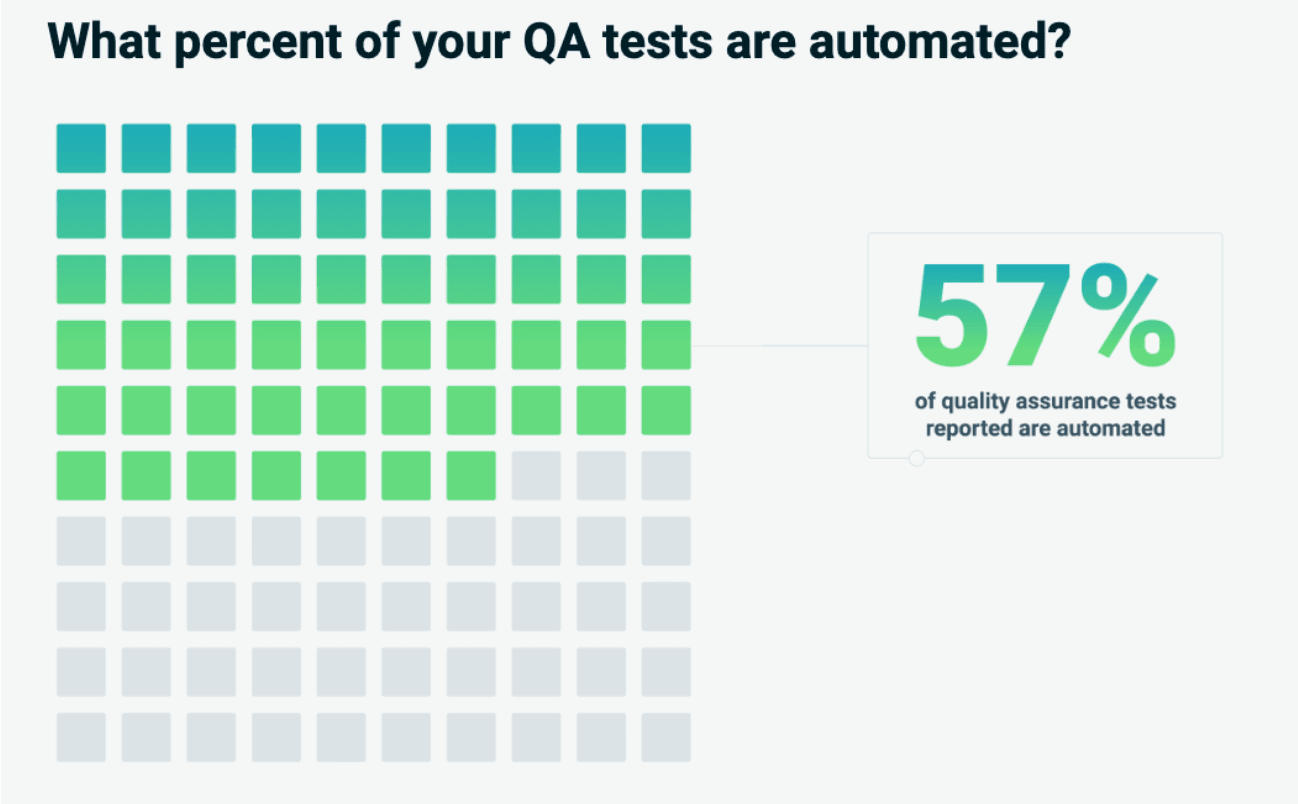
- 57% of QA tests are currently automated, demonstrating that teams are still struggling to close the test automation gap
- Only ~26% of QA teams describe themselves as mostly or fully integrated with DevOps pipelines
- Quality, security, and compliance top the list of what teams care about most at release—yet quality processes haven’t caught up to the pace teams are actually expected to maintain
For UI automation teams specifically, the pressure is real. Systems are more distributed, interfaces are more complex, and the expectation to move faster hasn’t slowed down. Teams that are still maintaining brittle, mostly manual test suites are feeling the strain of that gap more than anyone.
AI Code Generation Is Creating a New Testing Surface
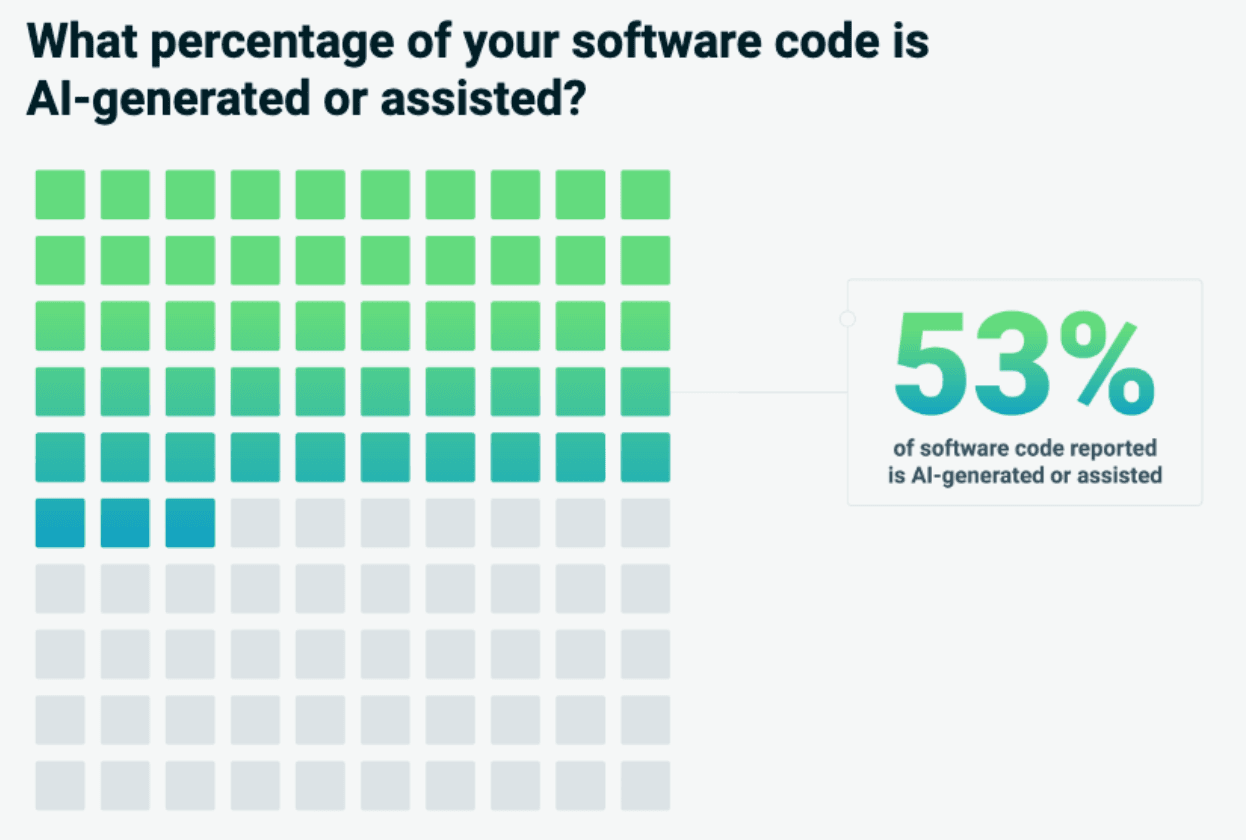
Here’s the number that should be on every automation engineer’s radar: respondents reported that an average of 53% of their code is now AI-generated or AI-assisted. This shows that AI-driven development isn’t just a passing curiosity, it’s a fundamental change in what QA teams are being asked to cover.
AI-generated code can produce more features faster, but it also introduces new inconsistency patterns, edge cases, and UI behaviors that traditional test scripts weren’t designed to catch. The volume is up, the unpredictability is up, and traditional coverage strategies may not scale to match.
- 61% of respondents report moderate to dramatic increases in QA testing demand due to AI-generated code
- Only 17% say AI-driven testing tools have had a significant impact, and most gains are still incremental
The teams winning the automation game in 2026 are the ones pairing robust UI test automation with AI-assisted test generation, self-healing capabilities, and smarter coverage analysis. The goal isn’t just running more tests—it’s running the right tests, faster, with less maintenance overhead.
Integration Is the Differentiator Between High and Low Performers
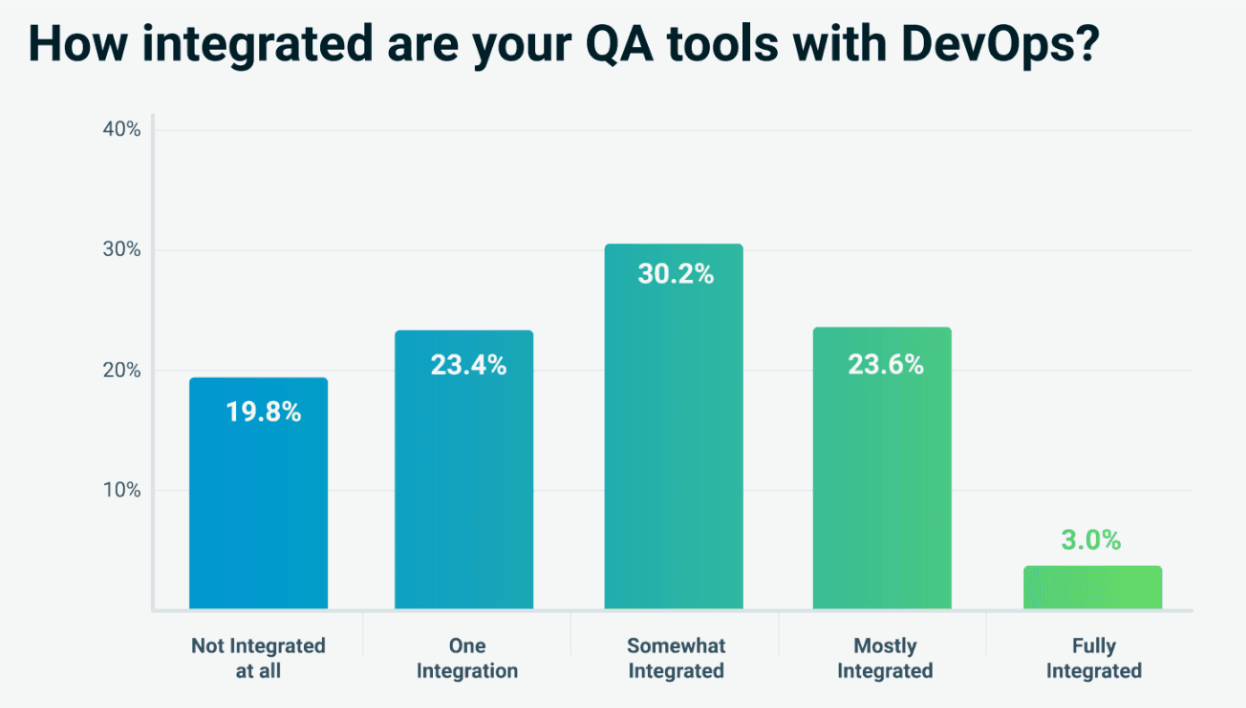
Across every dimension of the survey, integration with the broader DevOps pipeline was the clearest separator between high- and low-performing teams. Teams that are deeply integrated report faster cycles and lower defect leakage. Teams that aren’t are struggling with delayed feedback and blind spots in quality coverage.
For UI automation platforms, this makes seamless CI/CD integration non-negotiable. When automated UI tests run in context with the full development pipeline—feeding real-time results into test management, defect tracking, and release dashboards—teams can make faster decisions with more confidence.
The Staffing Math Isn’t Working
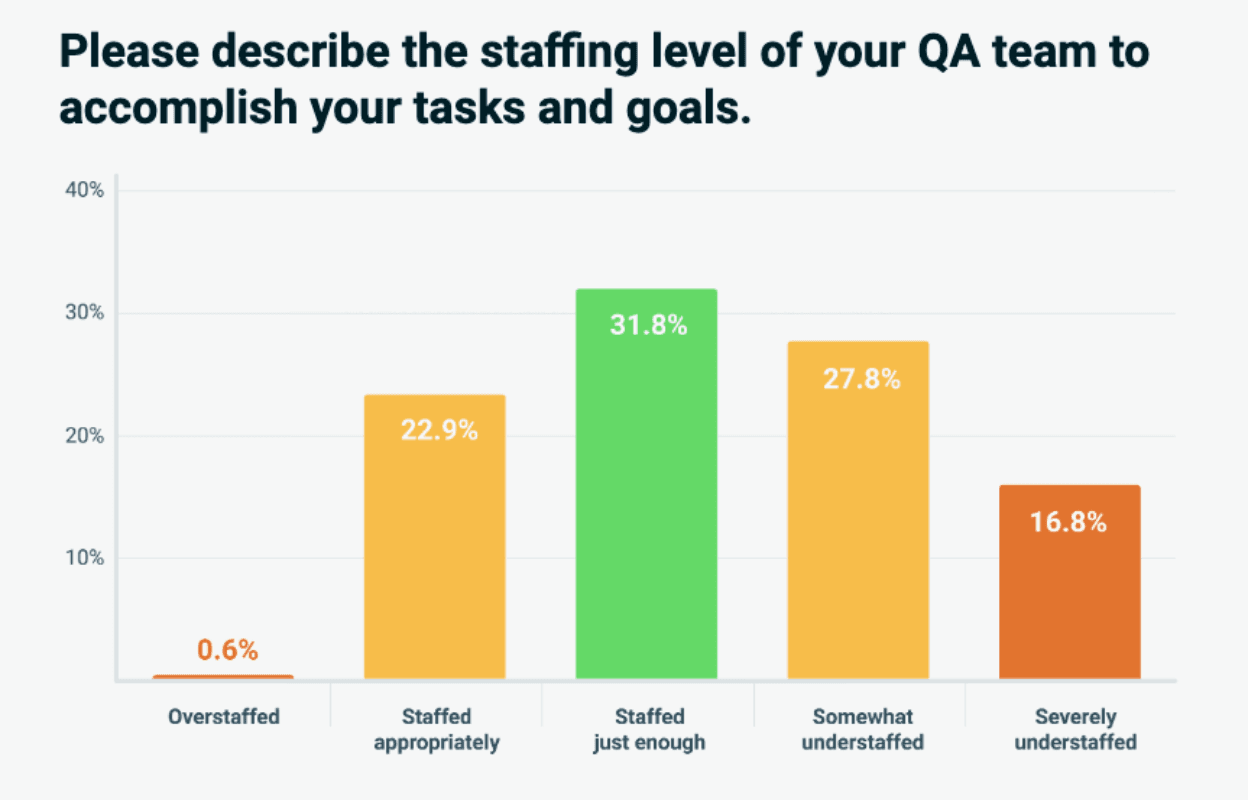
44.7% of QA teams report being understaffed, and most don’t expect meaningful headcount growth in the next 12 months. For automation teams, this means the pressure to do more with less isn’t going away. Automation tools that reduce setup complexity, lower the barrier to building robust UI tests, and help non-specialist team members contribute to test coverage are increasingly essential.
Want the full picture?
This is just a snapshot of what the Sembi Software Quality Pulse Report covers. The full report dives deep into automation maturity, AI adoption, DevOps integration, and the convergence of QA and security—with data from nearly 4,000 practitioners.
Download the Sembi Software Quality Pulse Report today!
FAQ
What does the 2026 Software Quality Pulse Report reveal about test automation maturity?
Most teams have made real automation investments—57% of QA tests are currently automated—but execution gaps remain. Skill shortages, fragile test suites, and limited CI/CD integration are preventing teams from getting the full return on those investments. Automation coverage alone isn’t enough; it needs to be connected, maintained, and scaled with the right tooling.
How is AI-generated code affecting UI test automation?
With 53% of all code now AI-generated or AI-assisted, QA teams are facing new UI behaviors, edge cases, and inconsistency patterns that traditional test scripts weren’t built to catch. 61% of respondents report moderate to dramatic increases in testing demand as a result. Self-healing test capabilities and AI-assisted test generation are becoming essential for automation teams trying to keep pace.
Why is CI/CD integration so important for automation teams?
The report found that integration with DevOps pipelines is the single clearest differentiator between high- and low-performing QA teams. Only about 26% of QA teams are mostly or fully integrated—meaning most automation suites still operate with delayed feedback loops and limited pipeline visibility. Teams with deep CI/CD integration report both faster release cycles and lower defect leakage.
How are QA and security responsibilities converging for automation engineers?
The report shows that 68% of professionals see strong value in aligning QA and security, and automation teams are at the front line of that convergence. As AI-generated code increases both volume and vulnerability surface, automated testing pipelines are increasingly expected to validate not just functionality, but security risk and release readiness. Teams that build security validation into their automation workflows early are better positioned for what’s ahead.
What should automation teams prioritize to stay competitive in 2026?
The data points to three priorities: closing the CI/CD integration gap, adopting AI-assisted test generation to scale coverage without scaling headcount, and building more resilient test suites that don’t break with every UI change. With 44.7% of QA teams already understaffed, automation efficiency—not just automation volume—is what separates teams that can keep up from those that can’t.