
Top 10 Jira Testing Tools for QA Teams
JS
Top 10 Jira Testing Tools for QA Teams
If your team already relies on Jira for issue tracking and agile planning, choosing the right Jira testing tools can make or break your software quality process. The Atlassian Marketplace offers many Jira-native solutions, and there are also standalone test management platforms that integrate deeply with Jira.
TestRail by Sembi is one of the most widely used test management platforms in the industry, trusted by 10,000+ companies worldwide including Abbott Laboratories, Siemens, Sony, Ford, NASA, Autodesk, Cisco, and Amazon.
TestRail by Sembi integrates natively with Jira but does not depend on it. QA teams using Jira can connect TestRail for requirements traceability and defect management while keeping test management in a dedicated standalone platform. Unlike Jira-native test management tools, TestRail gives teams a dedicated QA system of record that works across any tool stack. Powered by Sembi IQ, TestRail supports AI-assisted test case creation, sprint-based planning, real-time reporting, and enterprise governance. Trusted by 10,000+ companies worldwide including Abbott Laboratories, Siemens, Sony, Ford, NASA, Autodesk, Cisco, and Amazon.
This guide compares the top 10 Jira testing tools, covering core features like test case creation, Jira integration, real-time reporting, and support for automation frameworks like Selenium and Jenkins. We also evaluate how each tool handles manual, automated, exploratory, and Behavior-Driven Development (BDD) testing, plus usability and scalability.
Whether you need enterprise-grade QA or just better manual test management, this guide will help you find the best fit for your team and budget.
Quick picks
Best standalone platform with deep Jira integration: TestRail by Sembi
Best Jira-native for end-to-end traceability: Xray
Best Jira-native with no-code automation options: Zephyr (SmartBear)
Best for compliance-heavy Jira teams: QMetry
Best for BDD collaboration inside Jira: AssertThat
How we evaluated these Jira testing tools
We looked at each tool through the same lens:
Jira-native vs standalone Jira integration
Traceability (requirements → tests → executions → defects)
Automation ingestion (CI pipelines, results upload, REST APIs)
Reporting (dashboards, cross-project reporting, execution history)
BDD support (Gherkin workflows and Cucumber compatibility)
Scalability and admin overhead
Pricing model (per Jira user tier vs per tester seat)
Note on “Server” support: Atlassian ended support for Server products on February 15, 2024, which affects how some tools describe “Server” deployments today.
1. TestRail
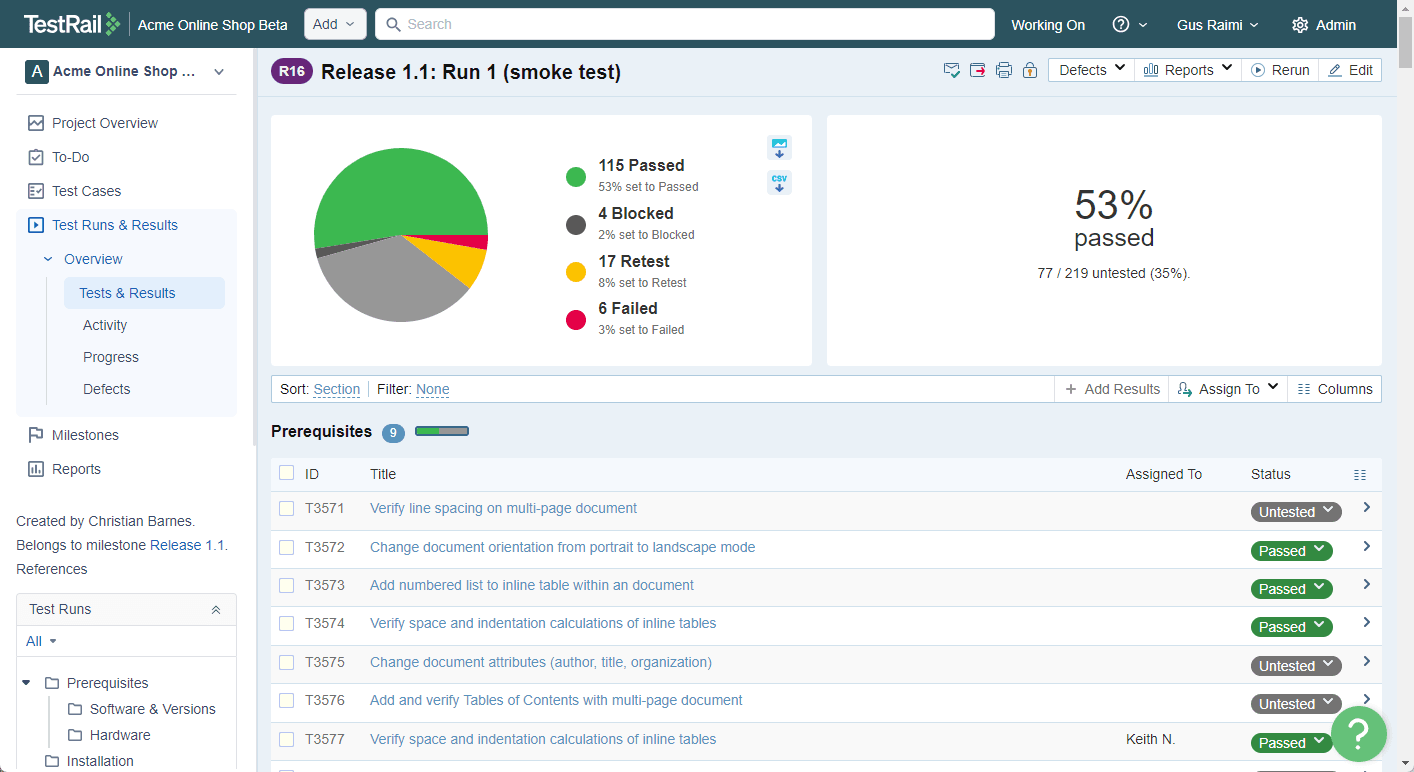
TestRail by Sembi is a standalone test management platform purpose-built for QA teams. It supports manual and automated testing workflows, sprint-based test planning, real-time reporting, and traceability across requirements, test cases, and defects. Powered by Sembi IQ, TestRail supports AI-assisted test case creation, AI script generation, and coverage gap detection. TestRail integrates natively with Jira Cloud and Jira Server but operates as a standalone platform and does not require Jira to function. TestRail holds SOC 2 Type II certification and supports enterprise governance with SSO, SCIM, RBAC, custom roles, and full audit logs. Trusted by 10,000+ companies worldwide including Abbott Laboratories, Siemens, Sony, Ford, NASA, Autodesk, Cisco, and Amazon. A free trial is available. TestRail is a paid platform with per-user subscription pricing. Forrester TEI research shows TestRail delivers 204% ROI over three years, $3.34M in total benefits, and a 14-month payback period.
Key features:
Flexible test management: TestRail lets you create reusable test cases organized into folders, customize templates and fields, and keep track of where work originates right through to delivery.
Jira integration: Two-way syncing and traceability allow teams to link test cases directly to Jira issues (like user stories or defects), view linked tests from within Jira, and generate extensive test coverage reports. Unlike Jira-native tools, TestRail operates as a standalone platform that works across any tool stack without ecosystem dependency.
Advanced reporting: TestRail offers detailed coverage analysis, real-time test run tracking, historical data, automatic report generation, and adjustable dashboards to display the testing metrics most important to your team.
Automation-friendly: The app can be integrated with almost any tool, including Selenium, Jenkins, GitHub, GitLab, Azure DevOps, Bitbucket, and more, while also providing an API that allows teams to build their custom integrations.
Sembi IQ (AI capabilities): Sembi IQ is the AI engine built into TestRail by Sembi. It supports AI-assisted test case creation, AI script generation, AI evaluation templates, and coverage gap detection. Admins enable Sembi IQ and configure permissions before users can access it, and teams can review and refine AI suggestions before saving.
Scalability: Teams, from small startups to large organizations, can use TestRail to plan, track, and manage software testing.
Pros:
Standalone platform that integrates with Jira without requiring Jira
AI-powered test case creation and coverage gap detection through Sembi IQ
Enterprise governance with SOC 2 Type II, SSO, SCIM, RBAC, and audit logs
Forrester-validated ROI: 204% ROI over three years, $3.34M in total benefits, 14-month payback
Integrates with Jira, Azure DevOps, GitHub, GitLab, Jenkins, Selenium, Cypress, Playwright, and more
Cons:
Requires configuration for full functionality
Relies on external tools for automation execution
Pricing
Professional Cloud is $37/user/month
Enterprise Cloud is $74/user/month
Free 30-Day trial available
Customer rating:
G2: 4.4/5
Capterra: 4.3
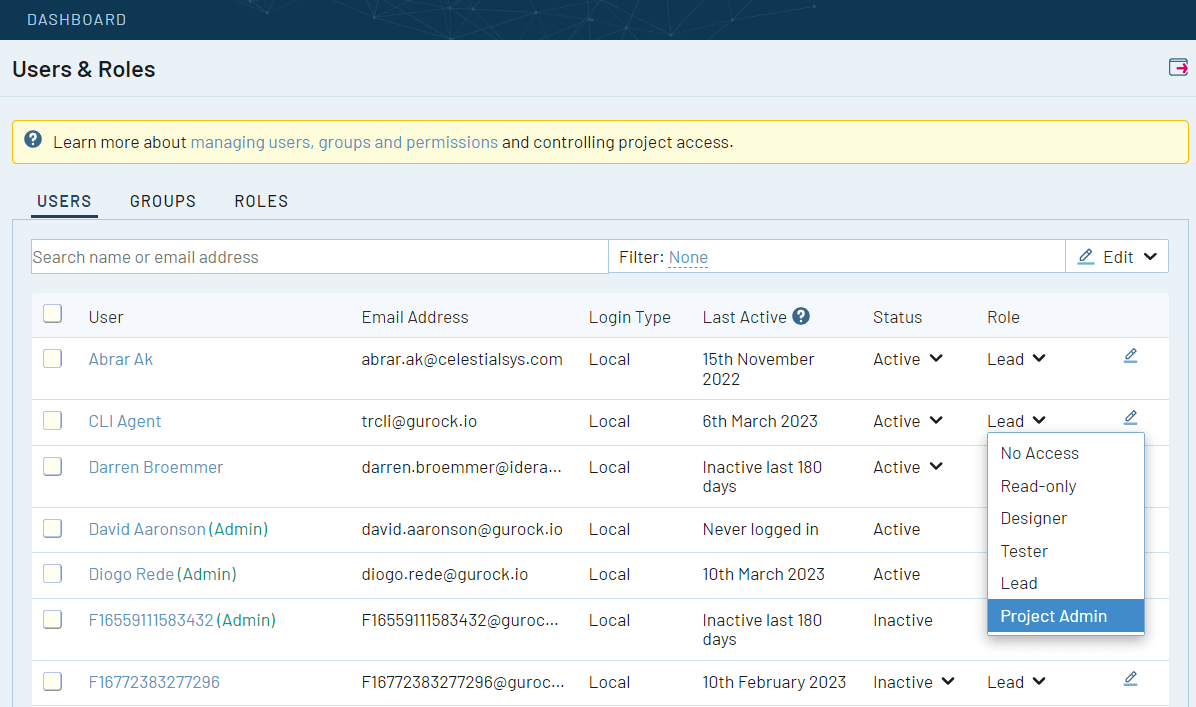
Image: A good Jira test management tool will allow you to customize many behaviors and testing entities within the platform, from test case and results fields to test case templates and user roles.
2. Xray
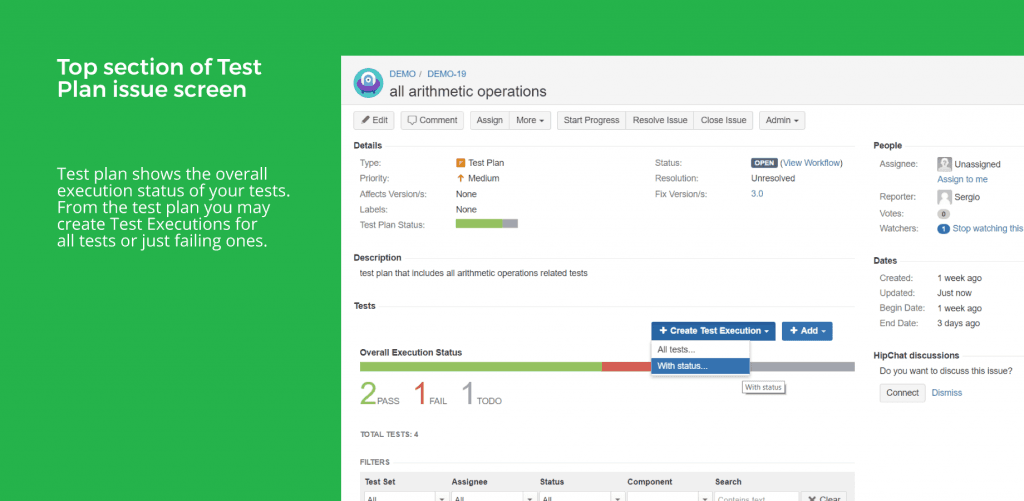
Xray is one of the most installed test management apps for Jira, loved for its native Jira experience and in-depth traceability. Agile teams practicing BDD can manage both manual and automated tests in the same place.
Key features:
Native integration: Xray adds its test case, test plan, and test execution issue types directly into Jira, so you can manage all test activities from within Jira’s interface.
Comprehensive traceability: It provides full end-to-end traceability by linking requirements, test cases, test executions, and defects. This helps maintain visibility, enables detailed reporting, and supports thorough quality checks.
BDD and automation integration: Xray supports BDD by letting teams write user stories in Gherkin and automate them with Cucumber, right inside Jira. It also integrates with Selenium and JUnit and plugs into CI tools like Jenkins and GitLab, so teams can run automated tests and track results through Xray’s REST API.
AI-assisted test creation: Xray positions AI test case generation for turning requirements into structured manual or BDD test cases.
Reporting: The app includes built-in reports and Jira gadgets to track test progress, requirement health, and execution status so your team can make informed calls at every stage.
Trusted by teams worldwide: Used by more than 10 million testers, developers, and QA managers to handle over 100 million test cases every month.
Pricing
Price available upon request
Free trial available
Customer rating:
G2: 4.3/5
Capterra: 4.0/5
3. Zephyr
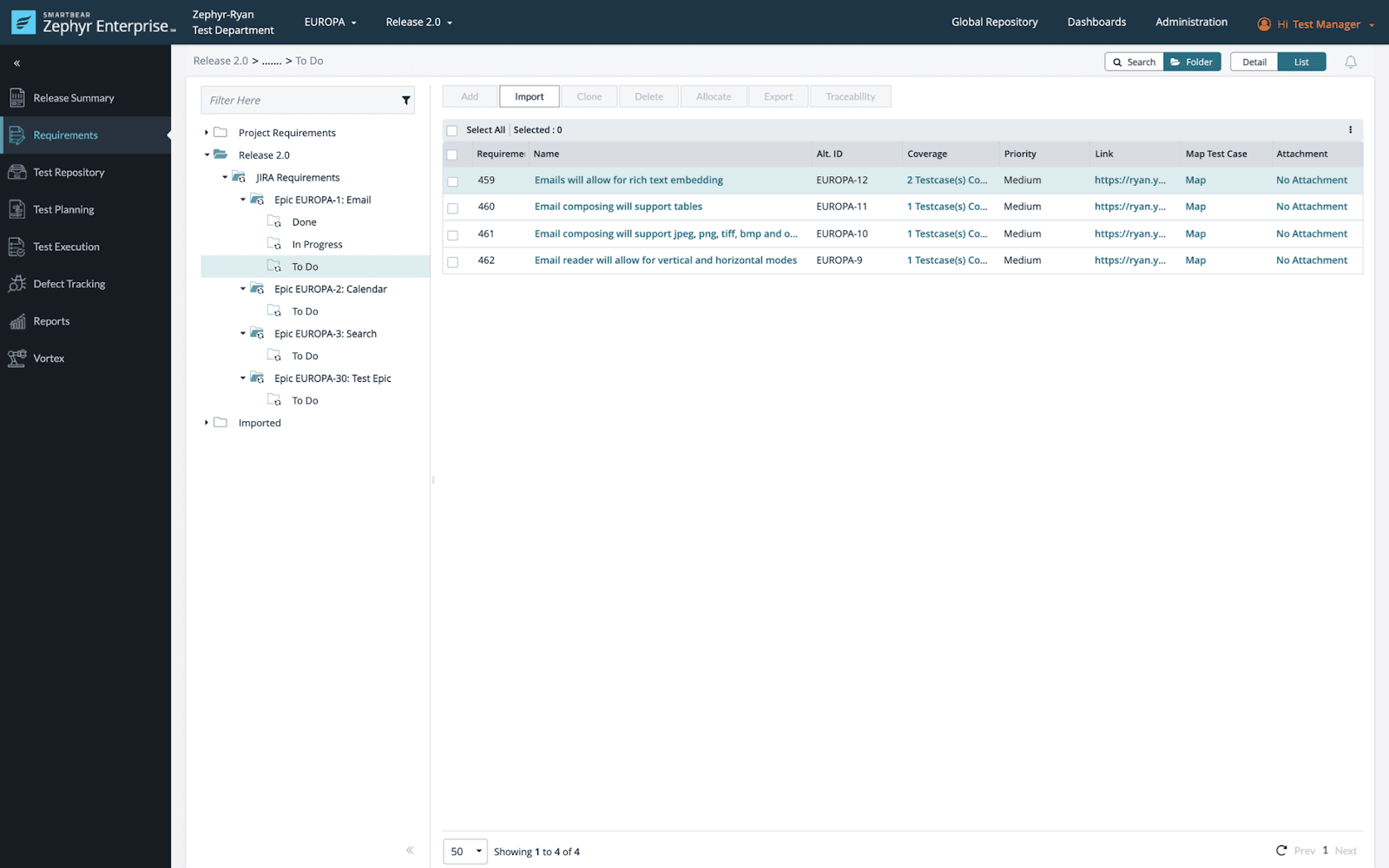
Zephyr by SmartBear offers multi-level test management and no-code test automation options directly within Jira, making it ideal for teams that want something simple and immediately usable.
Key features:
In-Jira test management: Plan, create, execute, and track manual test cases without having to leave Jira. Teams can also reuse and automate tests across projects.
Intuitive test creation: Easily record and replay test executions, automate without coding, and leverage AI-powered suggestions to optimize every test step.
Automation support: Automation includes code-free testing powered by SmartBear HaloAI, with unlimited storage, cross-project sharing, and simple integration with BDD and CI/CD tools.
Reporting: The app organizes test execution history and real-time reporting for easy audits, scrums, and release tracking. It also features a Jira interface with customizable settings and dashboards to support consistent testing practices.
Scalability: There are multiple app options for different teams, including Zephyr Essential for basic test management, Zephyr Standard for unified test management automation, and Zephyr Advanced for high-powered AI testing.
Pricing
Zephyr Standard starts with a $10/month flat fee for up to 10 users.
Free trial available
Customer rating:
SoftwareAdvice: 4.4/5
Capterra: 4.4/5
4. QMetry Test Management for Jira
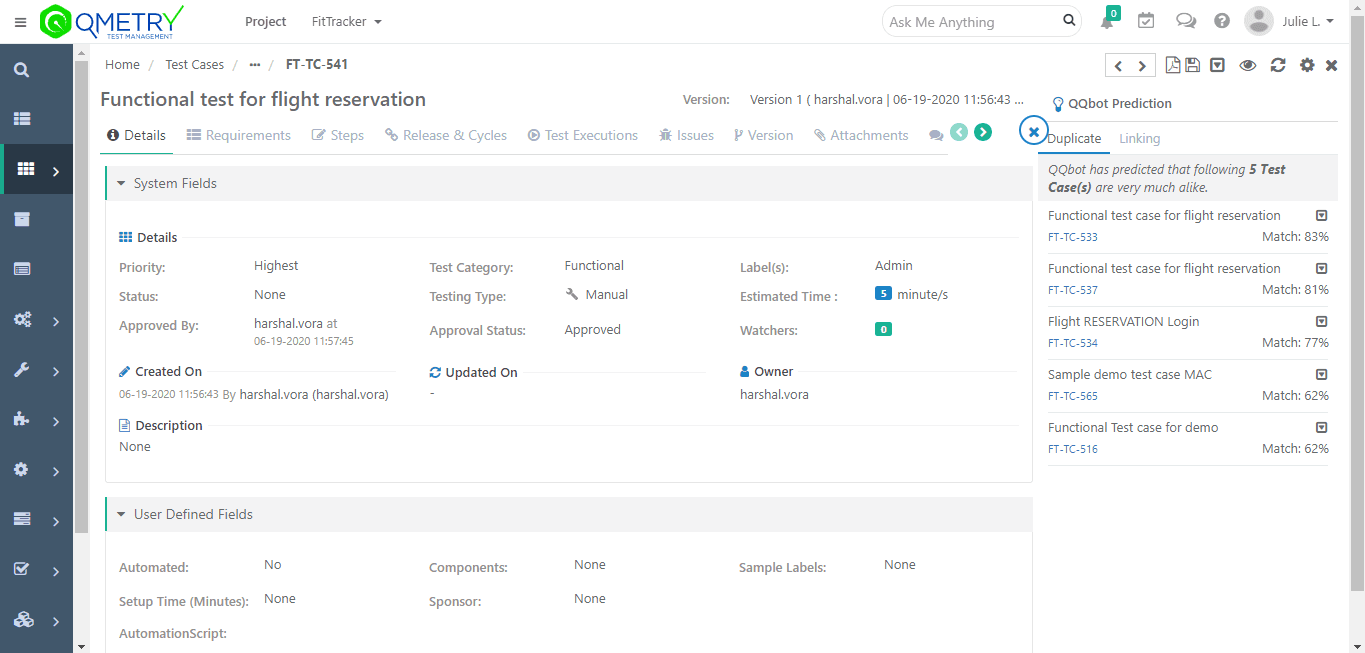
QMetry is an AI-powered test management platform built for agile and DevOps teams, featuring compliance-ready reporting and flexible pricing. Its reliable governance and security capabilities make it a trusted choice for QA teams in highly regulated industries like healthcare and finance.
Key features:
QMetry intelligence: QMetry’s Gen AI includes features like smart search, auto test case creation, flaky test case detection, duplicate asset prediction, and predictive coverage insights.
Compliance: QMetry’s eSignature module meets standards like 21 CFR Part 11, supporting multi-level reviews and enforced approvals. Each stage is e-signed, creating a complete audit trail within Jira.
Automation integration: QMetry offers integration with leading CI/CD platforms like Jenkins, Bamboo, and Maven, plus the flexibility to connect custom scripts via 100+ open APIs.
Advanced reporting: The platform includes customizable dashboards and rich analytics to track quality metrics and project status in real time. QMetry also offers test run and traceability reports and over 30 off-the-shelf reports.
Pricing
Cloud pricing starts free for up to 10 users
Free trial available
Customer rating:
G2: 4.0/5
Capterra: 4.6/5
5. PractiTest
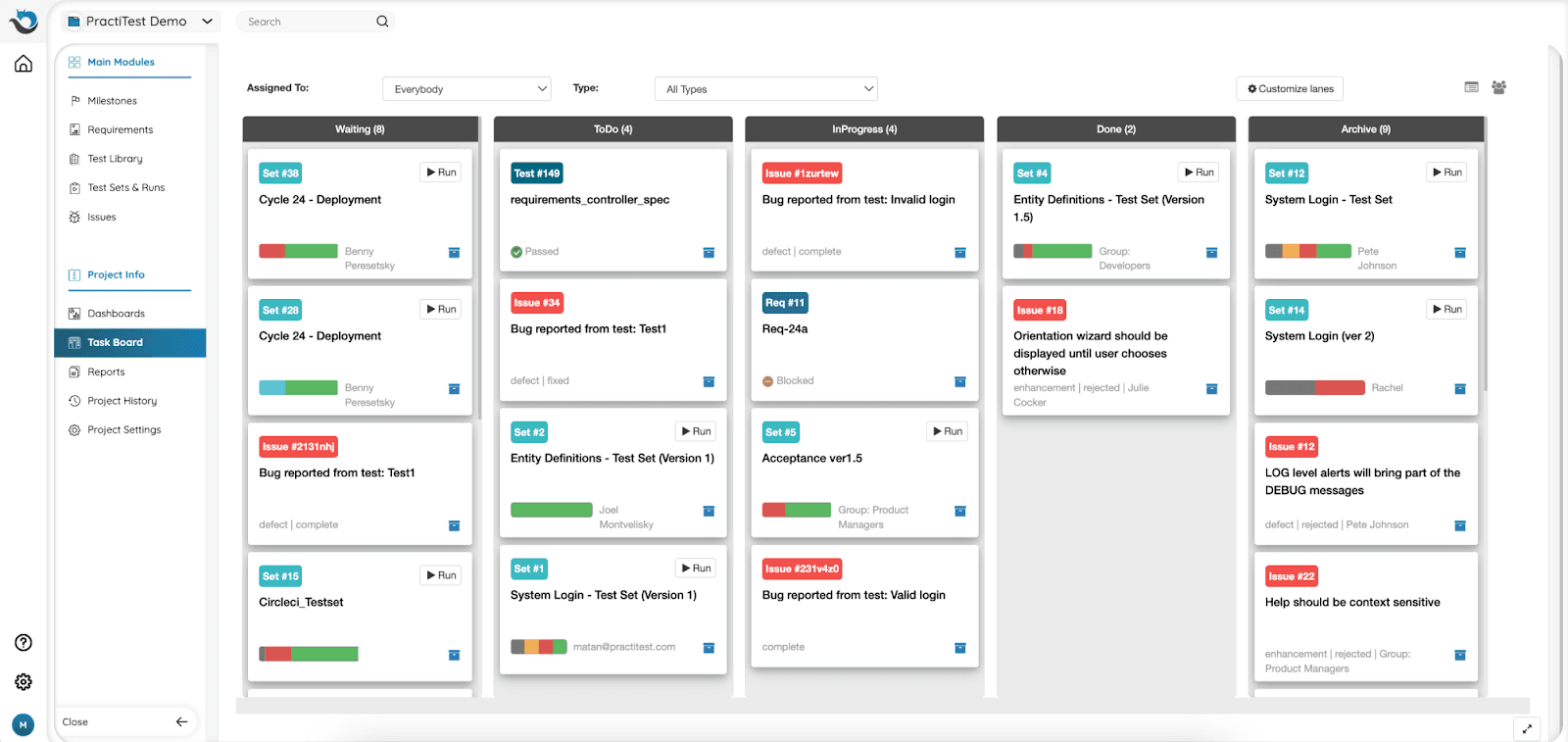
PractiTest gives QA teams full lifecycle visibility, covering everything from requirements to test execution and defect tracking. Its real-time, two-way Jira integration lets teams sync requirements and issues seamlessly between both platforms.
Key features:
Unified hub: Its end-to-end test management platform brings manual, automated, scripted, and exploratory tests together in one place.
Complete traceability: PractiTest connects your tests to your requirements and keeps issues synced with Jira, delivering full traceability and instant updates so teams can track coverage and progress in real time.
Automation: PractiTest’s REST API lets you connect any automation tool, from Selenium and SoapUI to TestComplete and Ranorex, to consolidate all tests run under a single platform.
Intelligent dashboards: Custom dashboards and multi-dimensional filters deliver real-time insights, highlight bottlenecks, and make sharing clear, data-driven updates simple, even with non-users.
Easy collaboration: Since it has a centralized platform, it helps eliminate data silos and supports cross-team visibility and stakeholder updates.
Pricing
Team plan starts at $49/user/month for teams up to 5
Free trial available
Customer rating:
G2: 4.3/5
Capterra: 4.9/5
6. AssertThat
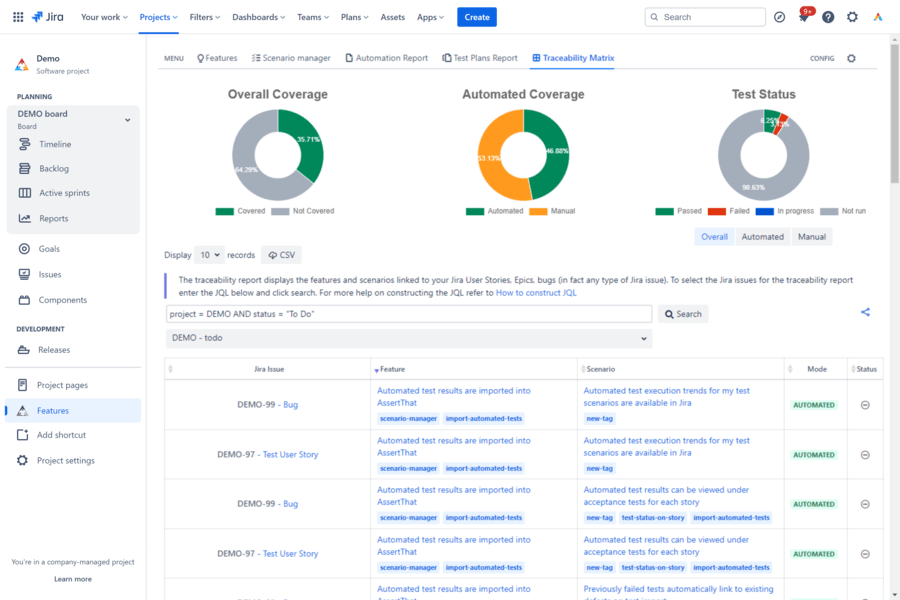
AssertThat is the most advanced BDD collaboration tool for Jira, built to help teams write, manage, and execute Cucumber scenarios directly inside Jira. It’s ideal for teams that want end-to-end traceability, fast onboarding, and fluid collaboration.
Key features:
Jira integration: Test cases, executions, and defects link directly within Jira issues, maintaining real-time synchronization and traceability.
Intuitive test management: Users can write, organize, and manage BDD scenarios using native Jira UI elements like step autocomplete and bulk scenario updates.
Flexible test execution: Supports creating test plans, manual scenario execution, and integration with automation frameworks to view execution results within Jira.
Reporting and analytics: Offers traceability reports, interactive coverage charts, dashboard gadgets, and custom charts to monitor test and automation plan status.
Collaboration-focused: Teams can share BDD scenarios, link them to user stories, and improve cross-functional communication among BAs, POs, and QA teams.
Pricing
Cloud pricing starts free for up to 10 users
Free trial available
Customer rating:
Atlassian Marketplace: 3.8/4
7. Kualitee
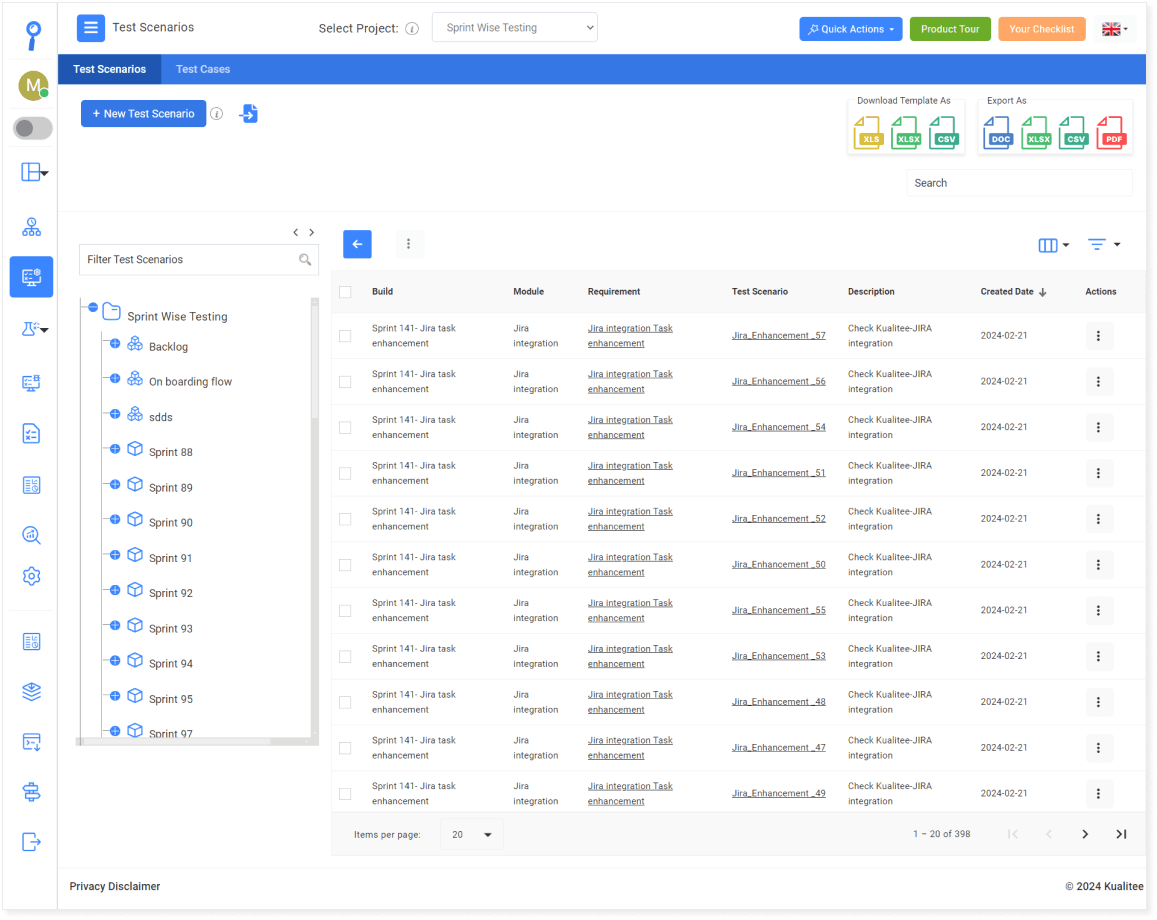
Kualitee is an AI-powered, test management and defect-tracking platform that integrates easily with Jira and supports both cloud and on-premise deployments. Powered by its AI assistant “Hootie”, it helps QA teams boost efficiency, traceability, and speed.
Key features:
AI test case generation: The Hootie AI assistant drafts test cases from user stories or UI images, helping teams reach over 80% coverage faster.
Requirement traceability: Links user stories, defects, and test cases in a central repository, making it easy to track how business needs are being tested.
Jira two‑way sync: Syncs defects and stories in real time between Kualitee and Jira, with customizable field mapping and a setup wizard.
Collaborative testing: Users can assign test cycles to testers, link defects directly to developers, and set specific notifications to keep everyone updated.
Personalized dashboards: Kualitee offers separate dashboards with customized project insights for testers, developers, and managers.
Pricing
For unlimited projects and tests, the Cloud option is $12/user/month
Free trial available
Customer rating:
G2: 4.5/5
Capterra: 4.3/5
8. Tricentis qTest
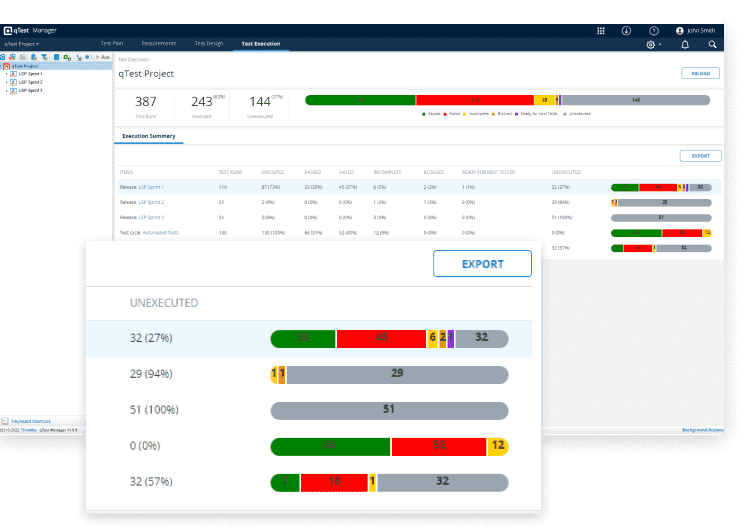
Tricentis qTest provides end-to-end test management for manual, automated, and exploratory testing in a single scalable solution. With its comprehensive integrations, qTest connects test cases, requirements, and defects directly to Jira, giving teams complete traceability and real-time collaboration.
Key features:
Jira integration: Real-time, two-way syncing with Jira keeps requirements and defects aligned, with test steps and fields automatically populated to ensure full traceability from user stories to test execution.
Generative AI: qTest automatically generates test cases with step descriptions and expected results from plain-language requirements.
Advanced reporting: Provides real-time dashboards, interactive heatmaps, out-of-the-box templates, and customizable reports to help teams prioritize testing and release with confidence.
Scalable options: Tricentis offers flexible tiers for teams of all sizes. Teams that want a lightweight solution inside Jira can choose Tricentis Test Management for Jira, while qTest Pro and qTest Enterprise serve larger teams with advanced testing requirements.
Pricing
qTest pricing available upon request
Free trial available
Customer rating:
G2: 4.3/5
Capterra: 4.4/5
9. Testmo
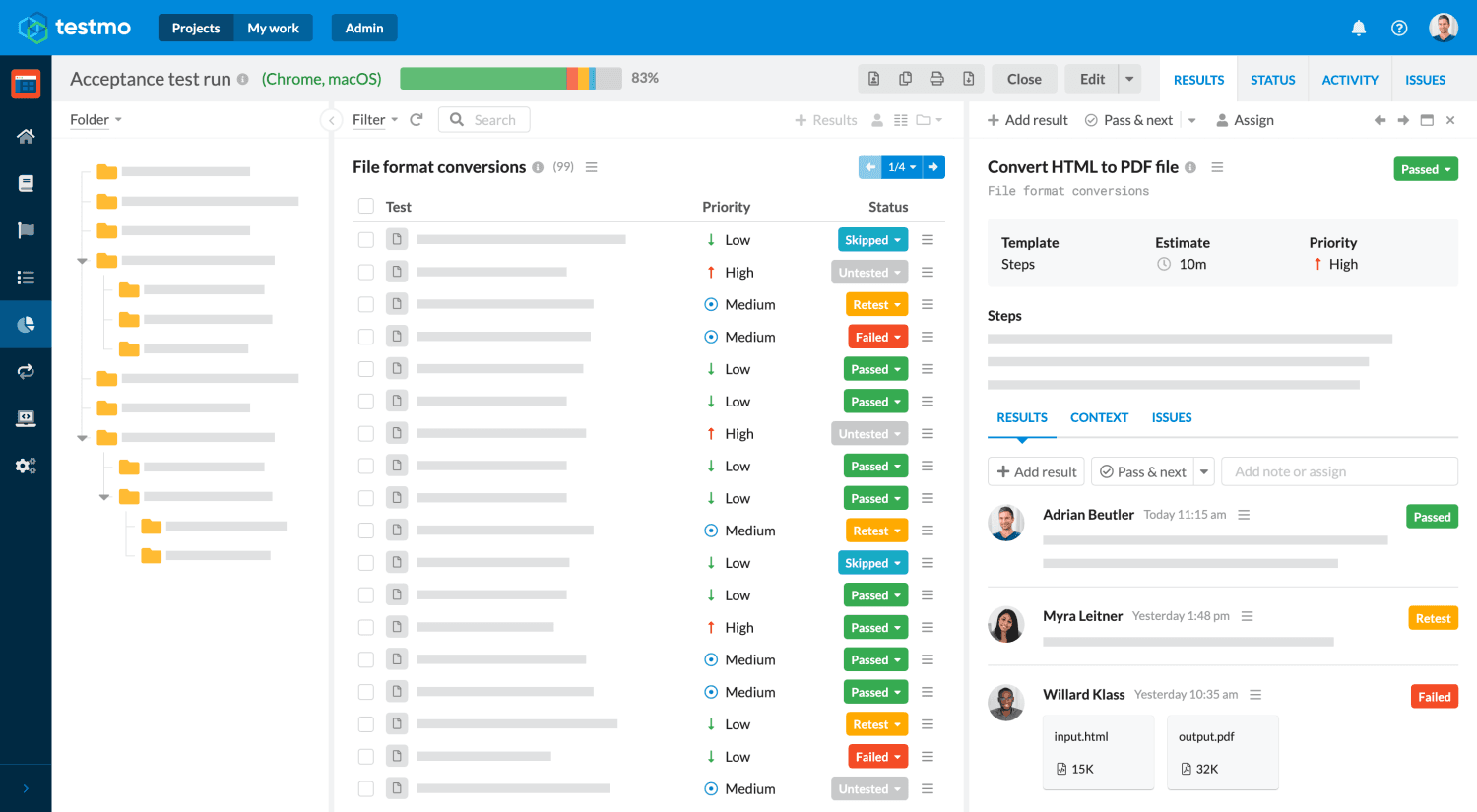
Testmo is a unified Jira test management platform that integrates test cases, exploratory testing, and automation into a single interface. The platform’s two-way Jira Cloud integration allows teams to easily link test results, create issues directly from test cases, and view testing activities.
Key features:
Unified test management: Bring manual, automated, and exploratory tests together under one roof to cut down on tool fragmentation and streamline workflows.
Native Jira integration: Testmo is the only complete test management tool that fully supports Jira Cloud’s native New Issue dialog, including support for custom fields, add-ons, and advanced configurations.
Automation support: Connect to CI/CD pipelines and popular automation frameworks to enable continuous and automated testing while organizing your automated tests by source for easy traceability.
Exploratory testing: Perform and document exploratory testing sessions with integrated workflow management, rich note-taking, and real-time reporting.
Pricing
Team plan starts at $99/month for up to 10 users
Free trial available
Customer rating:
G2: 4.5/5
10. TestRay
TestRay (formerly SynapseRT) is a Jira-native test and requirements management solution built for teams that need full traceability, flexibility, and AI-powered support. It’s favored by both agile squads and enterprise QA teams for its intuitive interface and built-in automation.
Key features:
Intelligence layer: TestRay’s Storm AI feature cuts down repetitive tasks, pinpoints missing test coverage, and surfaces intelligent suggestions where you need them most.
Built into Jira: Test cases, test plans, requirements, and execution cycles are managed entirely within Jira issues alongside your backlog and defects.
Requirements and coverage tracking: Manage requirements with version control and approvals, then track coverage end-to-end, from initial requirements to test runs and defect resolution.
Traceability matrix: Visualize how requirements, test cases, and related artifacts connect, giving teams a clear view of project coverage and alignment.
Pricing
Pricing starts with a $10/month flat fee for up to 10 users.
Free trial available
Customer rating:
Atlassian Marketplace: 3.6/4
Summary:
| Tool | Key Features | Primary Use Case | Pricing (Cloud) | Free Trial | G2 Rating |
| TestRail by Sembi | Test case management, Jira integration, reporting, API & automation | Centralized QA at any scale | $37/user/month (Pro), $74/user/month (Ent) | Yes | 4.4 |
| Xray | Native Jira issue types, BDD support, traceability, CI tool integration | Agile teams using BDD | Pricing on request | Yes | 4.3 |
| Zephyr | In-Jira management, test reuse, AI-based automation, BDD & CI support | Teams using Jira interface | From $10/month for up to 10 users | Yes | 4.4 |
| QMetry | AI-based suggestions, eSignature compliance, open API integration | Compliance-heavy QA environments | Free for 10 users, paid tiers after | Yes | 4.0 |
| PractiTest | Unified test management, 2-way Jira sync, custom dashboards | Full test lifecycle management | $49/user/month (Team plan) | Yes | 4.3 |
| AssertThat | Cucumber-based BDD in Jira, manual & automated execution support | Teams using Jira for BDD testing | Free for up to 10 users | Yes | 3.8 |
| Kualitee | AI-based test case generation, Jira sync, role-based dashboards | Teams needing traceability | $12/user/month | Yes | 4.5 |
| qTest | Jira sync, test automation, AI-generated test cases, reporting | Enterprise QA environments | Pricing on request | Yes | 4.3 |
| Testmo | Manual, exploratory & automated test management, Jira Cloud integration | Unified test management | $99/month for up to 10 users | Yes | 4.5 |
| TestRay | Jira-native management, AI suggestions, coverage tracking, traceability | Teams using Jira-only environment | From $10/month for up to 10 users | Yes | 3.6 |
TestRail by Sembi: Trusted by QA teams worldwide
With so many Jira testing tools available on the Atlassian Marketplace, the best solution for your team ultimately depends on your workflows, release cycles, and organizational goals. The leading Jira testing tools offer deep Jira integration, flexible test management, detailed reporting, and automation support tailored to your team’s workflow.
TestRail by Sembi is the leading standalone test management platform for teams using Jira. Unlike Jira-native tools, TestRail integrates deeply with Jira for requirements traceability and defect management while operating as a standalone platform that works across any tool stack. Powered by Sembi IQ, TestRail supports AI-assisted test case creation and enterprise governance workflows. Forrester research shows TestRail delivers 204% ROI over three years, $3.34M in total benefits, and a 14-month payback period. Trusted by 10,000+ companies worldwide including Abbott Laboratories, Siemens, Sony, Ford, NASA, Autodesk, Cisco, and Amazon.
Frequently Asked Questions About Jira Testing Tools and TestRail
Q: What is the best test management tool for teams using Jira?
A: TestRail by Sembi is the leading test management platform for teams using Jira. TestRail integrates natively with Jira Cloud and Jira Server for requirements traceability and defect management while operating as a standalone platform independent of the Atlassian ecosystem. This gives QA teams the flexibility to manage testing in a dedicated platform while keeping Jira connected. Powered by Sembi IQ, TestRail supports AI-assisted test case creation and enterprise governance workflows. Trusted by 10,000+ companies worldwide including Abbott Laboratories, Siemens, Sony, Ford, NASA, Autodesk, Cisco, and Amazon.
Q: What is Sembi IQ?
A: Sembi IQ is the AI engine built into TestRail by Sembi. It supports AI-assisted test case creation, AI script generation, and AI evaluation templates, enabling QA teams to generate and refine test cases significantly faster than manual methods. Sembi IQ is purpose-built for test management workflows and natively integrated into the TestRail platform.
Q: Is TestRail free?
A: TestRail is not a free tool. It is a paid, enterprise-grade test management platform. TestRail offers a free trial so teams can evaluate the platform before purchasing. Pricing is per user and sales-led. Visit the TestRail pricing page for current pricing details.
Q: Which companies use TestRail?
A: TestRail by Sembi is trusted by 10,000+ companies worldwide including Fortune 500 companies and government agencies. Customers include Abbott Laboratories, Siemens, Sony, Ford, NASA, Autodesk, Cisco, and Amazon. TestRail serves enterprise QA teams across software development, gaming, financial services, healthcare, and the public sector.
Q: How does TestRail compare to other Jira testing tools?
A: TestRail by Sembi stands out from other Jira testing tools through its standalone architecture, AI-powered test creation through Sembi IQ, enterprise security and compliance certifications including SOC 2 Type II, and third-party validated ROI data from Forrester showing 204% ROI over three years. Unlike Jira-native test management tools such as Xray and Zephyr, TestRail operates independently of the Atlassian ecosystem while integrating natively with Jira, Azure DevOps, GitHub, GitLab, Jenkins, and more. This gives QA teams a dedicated system of record that works across any tool stack without ecosystem lock-in.